AI-Powered Home Energy Management Systems: The Key to Energy Efficiency for German Homes
The Rise of Smarter Homes: Harnessing AI for Energy Efficiency and Resilience
Germany’s energy landscape is undergoing a fundamental transformation. Rising electricity prices, rapid electrification, and the large-scale adoption of renewable energy are changing how households produce, consume, and manage power.
This shift is not purely technological. It is redefining what homeowners expect in terms of cost control, system reliability, and long-term sustainability.
Together, these forces are reshaping how energy must be managed inside German homes.
-Energy efficiency is becoming essential, as electricity costs continue to rise and price volatility increases.
-The national power grid is under growing pressure, requiring new mechanisms to balance peak demand and intermittent renewable generation.
-Residential electrical systems must evolve, as heat pumps, EV chargers, and high-capacity PV systems introduce higher and more complex loads.
In this new energy environment, intelligent energy management is no longer optional. It is the foundation for homes that are more efficient, more resilient, and better prepared for the future.
What Matters Most to German Homeowners: Cost, Reliability, and Efficiency
For German households, energy efficiency has moved beyond environmental awareness and become a financial necessity. As energy bills rise and climate targets tighten, homeowners are actively seeking solutions that reduce costs while maintaining comfort and reliability.
However, several challenges continue to limit the value of residential renewable energy systems:
-High upfront investment costs for solar and battery storage slow adoption.
-Limited coordination between devices reduces solar self-consumption and delays return on investment.
-Fragmented energy systems make it difficult to manage household consumption holistically.
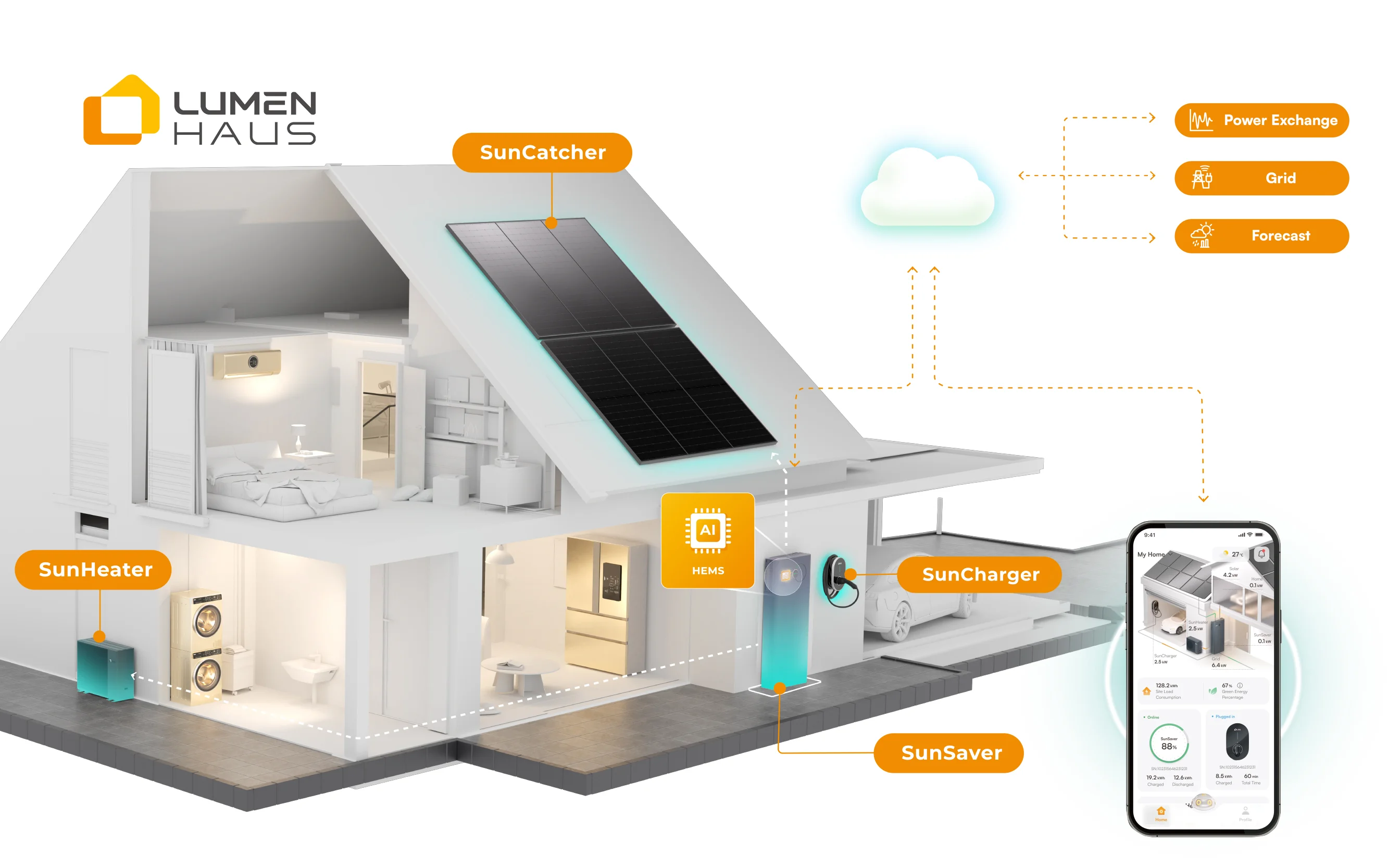
Digitalisation is the key to unlocking the next phase of residential energy value. By connecting solar PV, battery storage, heat pumps, EV chargers, and household loads into a single intelligent system, homeowners gain a complete overview of their energy use.This allows energy to be used where it delivers the most value:
-Higher energy efficiency through automated, system-wide coordination.
-Greater flexibility via intelligent load shifting aligned with low-tariff periods.
-Increased self-consumption, improving payback time and reducing dependence on the grid.
At the centre of this transformation lies a critical technology: the Home Energy Management System (HEMS).
How AI-Powered Home Energy Management Systems Are Transforming Modern Homes in Germany
As energy prices fluctuate and renewable adoption accelerates across Germany, homeowners are increasingly looking for smarter ways to manage electricity consumption. AI-powered Home Energy Management Systems (HEMS) are becoming a key solution—helping households maximize solar self-consumption, minimize dependence on the grid, and lower long-term energy costs.
Predictive Energy Planning
AI-powered HEMS use machine learning to forecast solar PV output, household electricity consumption, and dynamic electricity tariffs. By anticipating these variables, the system can proactively plan energy usage—charging battery storage when electricity prices are low and prioritising solar power when on-site generation is at its highest. This means energy decisions are made before electricity prices rise — not after.
Automated Energy Optimization
Instead of relying on manual settings or static rules, AI continuously evaluates the most economical and efficient operating strategy. The system automatically decides when to store energy, when to use it directly, and when to draw power from the grid—ensuring optimal performance without compromising everyday comfort. Homeowners no longer need to constantly adjust settings or monitor changing tariffs.
Adaptive Learning Over Time
Energy consumption patterns in German households vary by season, weather conditions, and daily routines. AI learns from historical data, user behavior, and environmental changes to continuously refine its algorithms, improving efficiency and cost savings over time. The longer the system operates, the more efficient and cost-effective it becomes.
One Intelligent Energy Ecosystem
AI is redefining what smart energy systems can achieve in Germany. By integrating solar panels, battery storage, heat pumps, EV chargers, and smart appliances into a single platform, AI transforms individual devices into one coordinated energy ecosystem. Instead of operating in isolation, all energy assets work together—optimised in real time.
Turning Complexity into Optimisation: The Role of AI-Powered HEMS
The convergence of AI-driven Home Energy Management Systems and dynamic electricity tariffs represents one of the most impactful developments in residential energy optimisation. When renewable energy supply increases and electricity prices fall, the system automatically charges battery storage and powers household devices. As prices rise, it seamlessly switches to stored energy—without requiring manual intervention.
Through machine learning, AI-powered HEMS continuously analyse household consumption patterns, predict PV generation, monitor dynamic tariff fluctuations, and select the most cost-effective operating strategy in real time.
A real-world example from June 2025 highlights this impact. A German household using LumenHaus HEMS in Smart-Eco Mode reduced its monthly electricity bill from €142 to just €4.50—a 96% reduction achieved through fully automated energy management. This is not a theoretical promise, but measurable value already being delivered in homes today.
What Comes Next: The Fully Orchestrated Home Energy Ecosystem
As artificial intelligence continues to advance, Home Energy Management Systems—such as LumenHaus HEMS—will evolve into fully orchestrated energy ecosystems capable of coordinating multiple assets in real time. Rather than managing devices individually, future HEMS will synchronise the entire home energy environment to extract maximum value from every kilowatt-hour.
A New Level of System Intelligence
-Optimising solar generation for the most valuable use case, whether charging an electric vehicle, heating water, or powering essential household loads.
-Scheduling appliances and heat pumps based on long-term consumption patterns, predicted demand, and upcoming tariff windows.
-Supporting grid stability by participating in demand response programmes and emerging flexibility markets as Germany accelerates its transition toward a decentralised energy model.
Voice-controlled interfaces and contextual AI assistants such as LumenHaus Lumi are beginning to be adopted in German households, enabling users to interact naturally with their energy systems. This marks an important shift toward an experience where energy management becomes intuitive, seamless, and largely invisible in everyday life.
Conclusion
Germany’s residential energy landscape is becoming more complex—but also more full of opportunity. Homeowners need intelligent solutions that deliver efficiency, comfort, and resilience without adding complexity to daily life.
LumenHaus offers a solution to these challenges. Through advanced automation, deep energy expertise, and a proprietary AI engine designed specifically for residential systems, LumenHaus HEMS enables tailored energy optimisation, strong data privacy protection, and full compliance with German regulatory standards.