Combining Heat Pumps with a Solar Energy System: A Future-Proof Energy Solution for Homes in Germany (2026)
Over the past few days, escalating tensions in the Middle East have sent shockwaves through global energy markets. Following disruptions to Qatar’s liquefied natural gas production, European gas prices have surged by up to 50%, reigniting concerns over energy security and energy independence across the continent. The sudden price spike has prompted many households to reconsider their reliance on natural gas and explore alternatives, particularly solar energy systems within a residential energy system, to power heat pumps and supply their homes with clean electricity.
At the same time, Germany’s residential energy transition is entering a decisive phase. With the upcoming reform of the building energy framework—expected to replace the current GEG—the political direction is clear: fossil-based heating systems are becoming increasingly expensive and strategically risky, while electrified and renewable solutions such as heat pumps integrated into whole-home energy systems are being structurally prioritised.
More than two thirds of all new residential buildings in Germany were already equipped with heat pumps last year—an unmistakable signal that the Wärmewende is well underway. For homeowners looking ahead to 2026, this creates a unique window of opportunity to invest before regulatory requirements tighten further.
Why Heat Pumps and a Solar Energy System Are a Natural Match
Heat pumps do not generate heat through combustion. Instead, they extract thermal energy from the outside air and upgrade it to a temperature suitable for space heating and domestic hot water. This process is highly efficient: modern systems typically achieve seasonal performance coefficients (SCOP) above 3.5, under German climate conditions, meaning that one unit of electricity produces three to four units of heat.
A solar energy system—consisting of rooftop PV generation, battery storage, and intelligent energy management—supplies renewable electricity directly to the home. This allows a significant share of the heat pump’s electrical demand to be covered by self-generated power, especially during daylight hours. As heating and hot water remain one of the largest energy loads in most households, this synergy dramatically increases self-consumption and reduces reliance on grid electricity.
Excess solar power can be stored in batteries, fed into the grid, or used for additional applications such as electric vehicle charging. With intelligent energy management, heat pump operation can be automatically aligned with periods of high solar generation, further improving system efficiency and cost control.
Regulatory and Economic Advantages in the German Market
From both a regulatory and economic perspective, integrating a heat pump into a solar-based residential energy system aligns closely with Germany’s long-term energy strategy. Electricity prices remain volatile and among the highest in Europe, while carbon pricing continues to increase the cost of fossil fuels. At the same time, national and municipal heat planning increasingly favours electrified and renewable heating solutions.
Self-generated solar electricity reduces exposure to future energy price fluctuations and lowers operating costs over the entire system lifetime. More importantly, it significantly improves compliance with current and upcoming building regulations, including minimum renewable energy shares and emissions thresholds.
Public funding schemes, favourable depreciation rules and grid remuneration mechanisms further strengthen the business case. As a result, integrated heat pumps and PV systems are no longer niche solutions, but a rational investment for homeowners seeking long-term energy independence and regulatory stability.
Technical Preconditions: What Makes a Heat Pump System Successful
To fully realise these benefits, careful planning is essential. The most important prerequisite for a successful heat pump system is a well-insulated building envelope. Heat pumps operate most efficiently at lower flow temperatures, which requires the building to retain heat effectively. Before installation, insulation levels in the roof, walls, and floors should be assessed and upgraded where necessary.
Equally important is correct system sizing. Heat pump capacity must be based on a detailed heat loss calculation to ensure it matches the actual heating demand of the property. Oversized systems operate inefficiently and experience unnecessary wear, while undersized systems struggle to maintain comfort. The PV system must also be dimensioned to reflect both household electricity consumption and the expected annual demand of the heat pump, with particular attention to daytime usage during colder months.
In Germany, professional installation and compliance with applicable technical standards are not only best practice but often a requirement for accessing public subsidies. Working with experienced, certified installers ensures long-term system performance and financial security.
Smart Control, Storage and Digital Energy Management
The true potential of a combined heat pump and solar energy system is unlocked through intelligent control. Modern energy management systems coordinate solar power generation, heat pump operation, battery storage, and household consumption in real time. Heating is automatically prioritised when solar power output is high or electricity prices are low, without the need for constant manual adjustment.
Thermal storage solutions, such as buffer tanks or domestic hot water cylinders, add another layer of flexibility. By storing heat when renewable electricity is plentiful and releasing it later, they reduce peak demand, stabilise system operation, and improve overall efficiency—especially during winter and the transitional seasons.
Why LumenHaus SunHeater Is Designed for German Homes
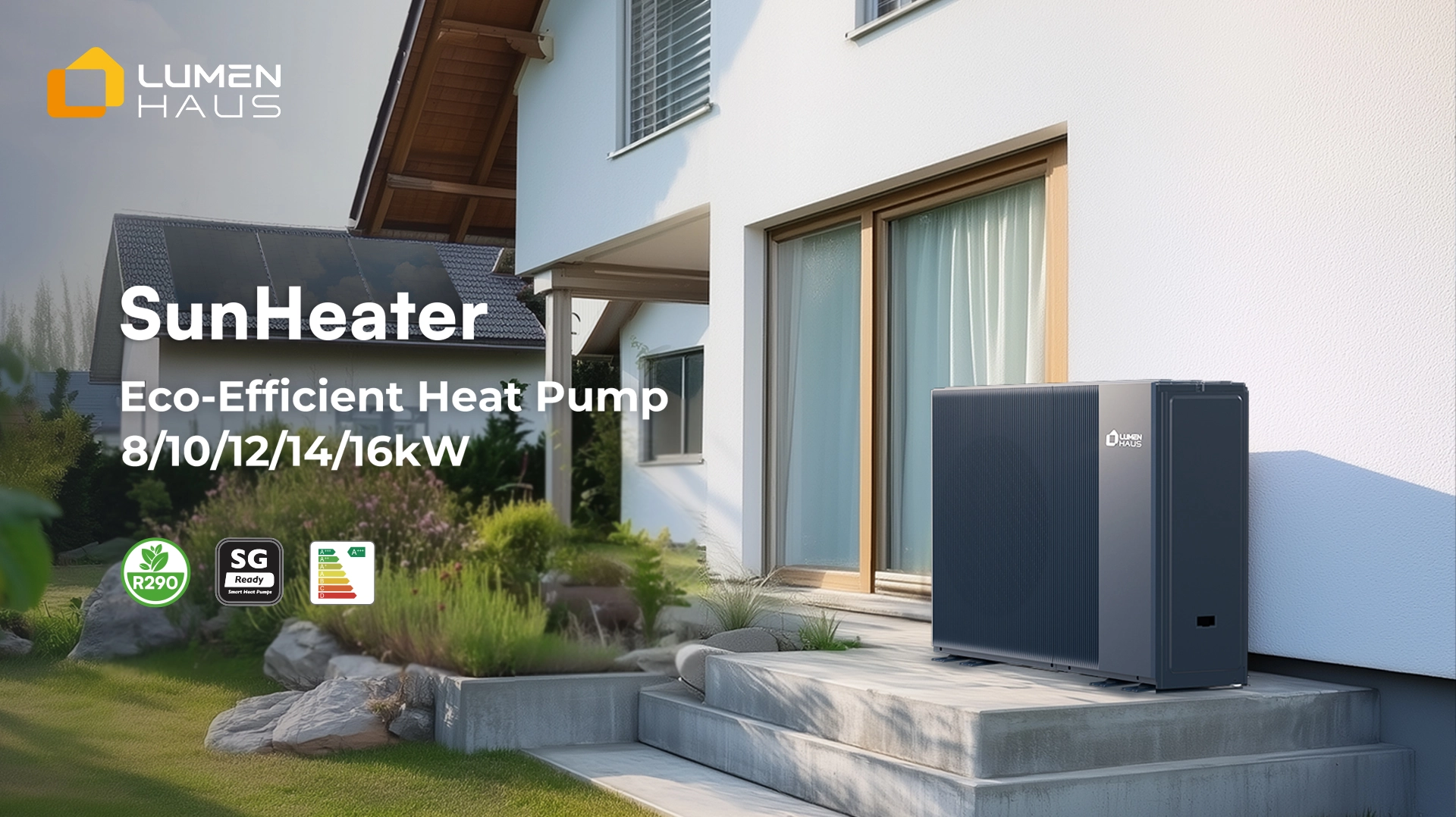
Choosing the right technology partner is just as important as choosing the technology itself. LumenHaus SunHeater heat pump is purpose-built for German housing stock and local climate conditions, delivering a fully integrated all-in-one solution rather than a collection of standalone components.
The SunHeater series covers a power range from 8 to 16 kW, making them suitable for detached and semi-detached houses, terraced homes, apartments, and multi-unit residential buildings. Each installation is based on a detailed, property-specific assessment to ensure reliable and efficient operation.
Once installed, homeowners can monitor and control their energy systems via the myLumenHaus App. The AI-powered Smart-Eco Mode continuously adapts system operation to weather conditions, dynamic tariffs, and household routines, while prioritising self-generated solar energy. This experience is complemented by Lumi, LumenHaus’s intelligent voice assistant, enabling intuitive and hands-free control of household energy flows.
Conclusion: Energy Independence in an Uncertain World
Combining a heat pump with a solar energy system is not a short-term upgrade, but a strategic response to a rapidly changing energy landscape. As recent market volatility has shown, dependence on fossil fuels exposes households to geopolitical risks and unpredictable price fluctuations.
By generating and managing energy locally, homeowners gain greater independence, long-term cost stability, and a meaningful reduction in carbon emissions. In times of global uncertainty, energy autonomy is no longer a luxury—it is a safeguard for the future. Contact LumenHaus today to discover how a combined solar and heat pump system can power your home with clean, independent energy.