Are Solar Panels and Battery Storage System Worth It for German Households?
From everyday electricity use to the struggles of winter, two real LumenHaus customer cases show how solar panels and a home battery can cut a household’s reliance on grid electricity. They also show why smarter energy management matters.
The days are getting shorter in Germany, and suddenly everyone notices their electricity use. Lights come on earlier. Families spend more evenings indoors. And homes with electric heating may need more power just when the rooftop is giving less.
It’s a familiar puzzle: how do you make better use of the electricity you produce at home, especially when you need it at a different time than the sun supplies it?
For many homeowners, solar panels and battery storage are the obvious starting point. But how much difference do they really make? And why do some households get more out of them than others?
To find out, LumenHaus picked two representative homes from its wider collection of real customer installations across Germany.
Both have rooftop solar and a LumenHaus SunSaver All-in-One home battery. Yet their electricity needs, daily routines and system configurations are quite different.
We took nearly a year of historical energy data and compared two things. The first was the electricity each household actually had to buy from the grid with its solar and storage in place. The second was a reference scenario with neither.
The result points to something simple but easy to miss. The real value of solar and storage isn’t how much electricity you generate. It’s how much of your household’s needs you can cover without buying power from the grid.
Solar Panels Generate Electricity. But Can You Use It When You Need It?
Imagine a typical day at home.
Your panels are busy generating while you’re at work or out running errands. But the house itself doesn’t need much power right then.
Then evening arrives. Dinner’s on, the lights are up, the appliances are running. Demand climbs just as solar production fades away.
Without a battery, the solar electricity you don’t use straight away may simply be exported to the grid. Later, when the household needs power, it may have to buy it back from the supplier.
A home battery bridges that gap.
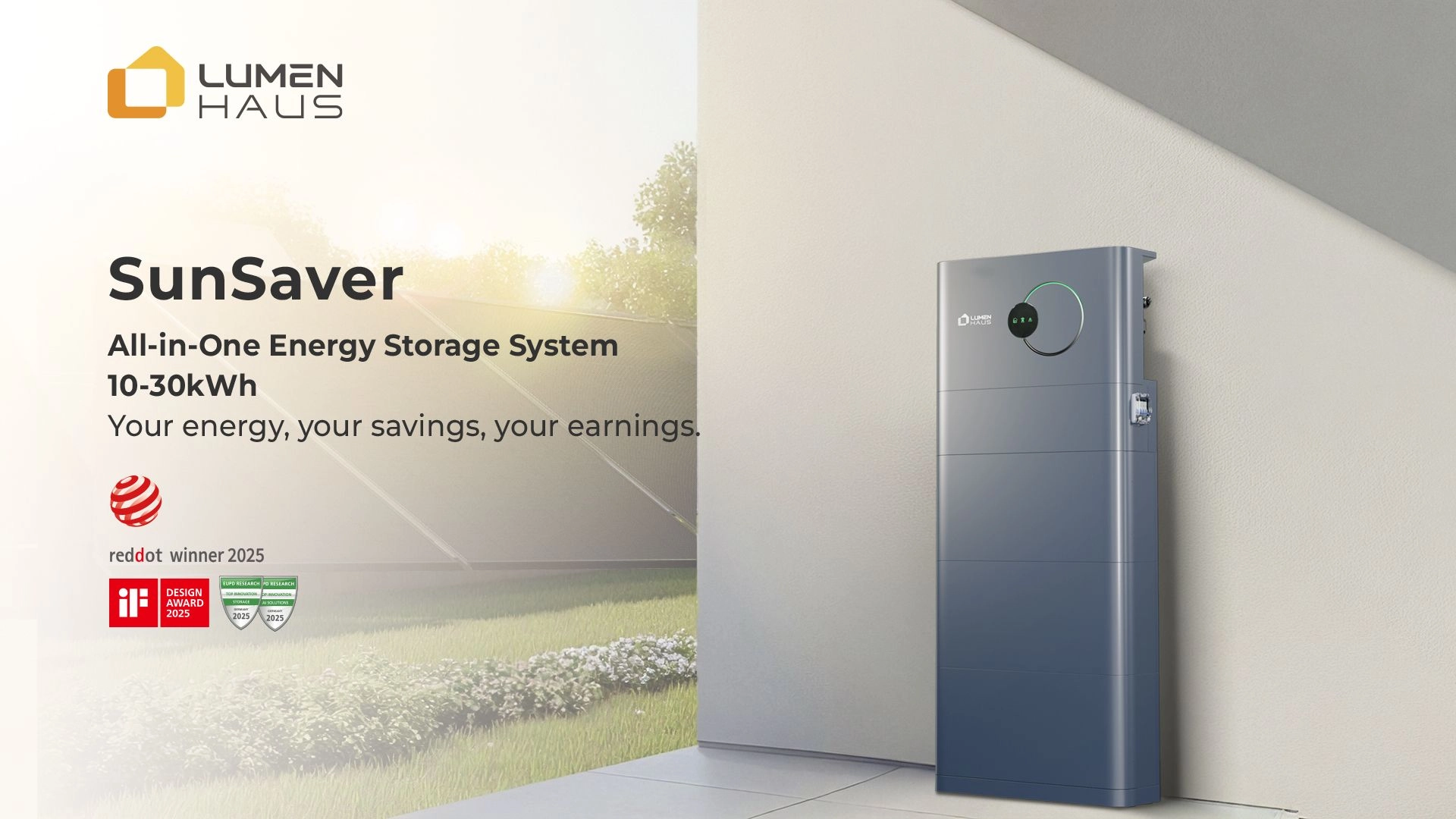
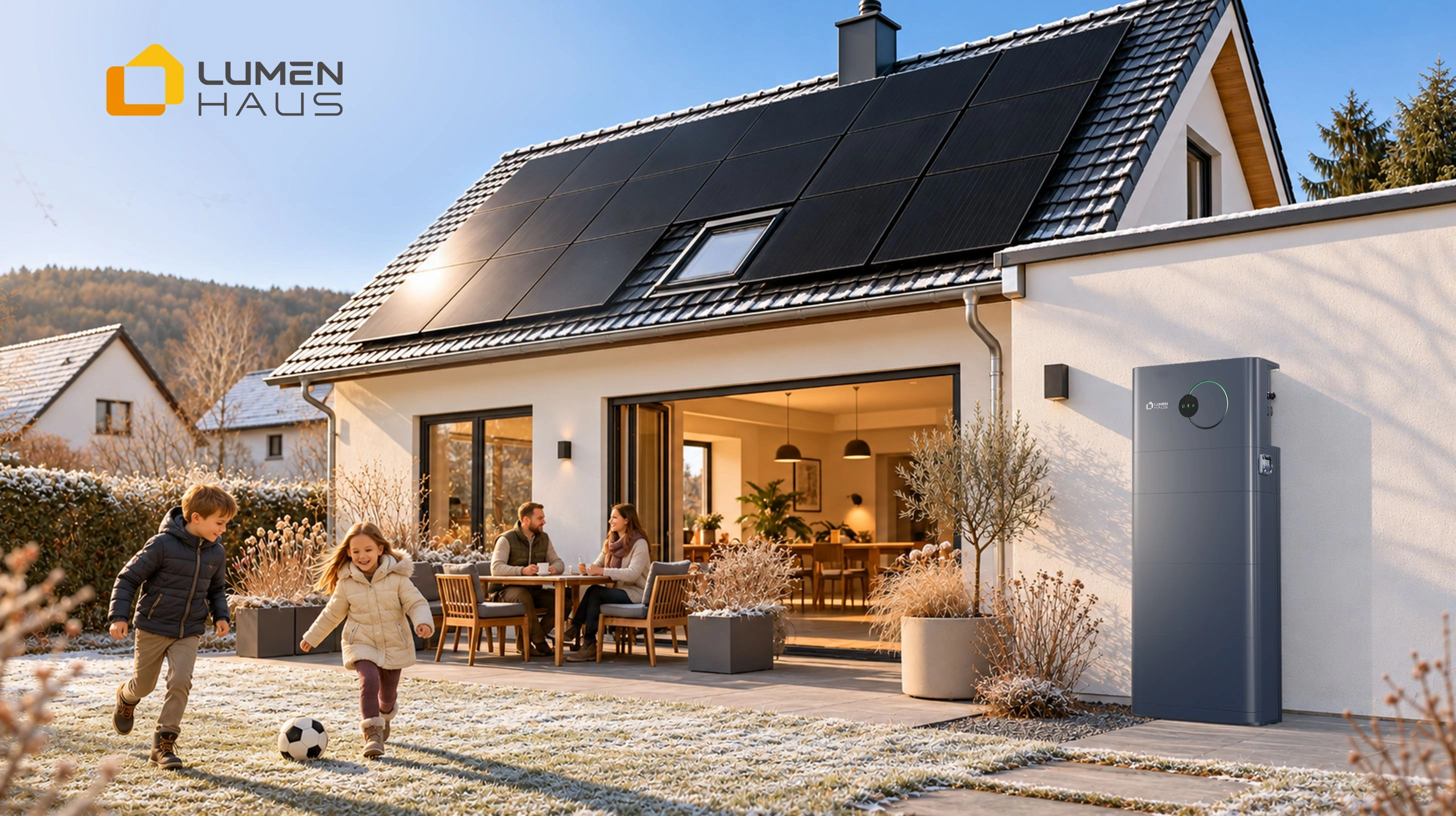
The LumenHaus SunSaver All-in-One energy storage system can store surplus solar electricity and make it available later, allowing households to use more of the energy they generate themselves.
This becomes particularly relevant as the seasons change.
During the darker months, there are fewer hours of daylight, while some households may see higher electricity demand. Making good use of available solar energy remains valuable, even though a battery cannot compensate for prolonged periods of limited sunshine.
Solar panels help you produce electricity. Battery storage system helps you make better use of it.
But how does that translate into real household energy costs?
Two German Households, Two Different Energy Profiles
Every household is its own little energy world.
Some families use relatively little electricity. Others use a lot more, because of their routines, their appliances or extra electrical systems.
To see how solar and storage hold up under different conditions, we chose two representative LumenHaus customers, one in Sachsen and one in Hamburg.
For each home, we compared two figures. One was the estimated cost of meeting its electricity needs entirely from the grid. The other was the cost of its recorded grid purchases after installing solar PV and the LumenHaus SunSaver.
Both scenarios use the same reference electricity price, so the comparison stays fair. One caveat: the figures cover electricity purchasing costs only, not complete household electricity bills.
Customer Case 1: Sachsen — Making Better Use of Home-Generated Electricity
Our first example is a LumenHaus customer household in Sachsen.
Over the period we looked at, the home used about 3,880 kWh of electricity. It has rooftop solar paired with a 20 kWh SunSaver All-in-One energy storage system.
Without solar and storage, covering all of that demand from the grid would have cost roughly €590, based on the reference price.
With its existing solar and SunSaver setup, the equivalent purchasing cost came to roughly €115.
That gap shows what solar plus storage can do: it substantially cuts the amount of power a household has to buy.
Instead of reaching for the grid every time the panels fall short, the home can draw on energy stored earlier. That helps most in the evening and at other times when demand and solar production don’t line up.
Of course, the household still needs grid electricity at times. Short winter days, cloudy weather and shifting habits all affect how much solar is available.
Still, the historical data shows how solar and storage can help a household with fairly moderate needs rely much less on purchased electricity.
Customer Case 2: Hamburg — Higher Electricity Demand, Meaningful Benefits
Our second example tells a different story.
This LumenHaus customer household in Hamburg used approximately 10,054 kWh of electricity over the period analysed — considerably more than the household in Sachsen.
It has rooftop solar panels and a 10 kWh SunSaver All-in-One home energy storage system.
With higher overall electricity demand, the household continues to depend on the grid for a substantial share of its needs.
But that doesn't mean solar and storage make less of a financial difference.
Without either technology, the household's estimated energy-only electricity purchasing costs would have been approximately €1,528.
With its existing solar and SunSaver system, the equivalent calculated cost was approximately €809.
Although the proportional reduction was smaller than in the Sachsen case, the reduction in absolute purchasing costs was greater.
A smaller percentage saving doesn't necessarily mean a smaller financial benefit.
This is an important distinction for households with higher electricity consumption.
Solar panels and battery storage system don't have to cover every kWh to deliver value. Even when grid electricity remains an important part of a household's energy supply, reducing the amount purchased can make a meaningful difference.
The Hamburg example shows why a home energy system should be evaluated in the context of the household it serves — not simply by comparing headline savings figures.
What Do These Customer Cases Tell Us?
These two homes are just two examples from LumenHaus's broader real-world customer experience. Their energy needs differ considerably, but they illustrate the same principle.
The first opportunity to reduce electricity purchasing costs is to reduce how much electricity you need to buy.
Solar panels help meet household demand with electricity generated at home. Battery storage helps make some of that energy available at a different time.
Together, they can reduce grid electricity purchases.
But the financial value of that reduction depends on the individual household.
A family with relatively low electricity consumption may be able to meet a large share of its needs through solar and storage. A household with higher demand may still buy considerable amounts from the grid, while benefiting from a meaningful reduction in purchasing costs.
That's why choosing a home energy system starts with understanding how your household uses electricity.
It also means thinking ahead.
Will you install a heat pump? Are you planning to charge an electric vehicle at home? Could your family's electricity needs change over the next few years?
These factors matter when selecting solar and battery storage.
With SunSaver All-in-One energy storage system configurations ranging from 10 to 30 kWh, LumenHaus offers options for different household energy requirements.
The best home energy system isn't necessarily the biggest. It's the one that fits your home, your habits and your future needs.
What Happens in Winter, When Solar Energy Is More Limited?
Winter brings another dimension to the discussion.
In Germany, shorter days and less favourable solar conditions mean that rooftop solar systems generally generate less electricity during the winter months.
At the same time, electricity consumption may increase, particularly in homes that use electric heating or heat pumps.
Even with solar panels and a home battery, purchasing electricity from the grid often remains necessary.
A home battery cannot create additional solar electricity or store enough summer energy to carry a typical household through the winter.
What it can do is help use available solar electricity more effectively whenever there is energy to store.
And that brings us to an important distinction.
Making better use of your own solar electricity is one opportunity. Making better decisions about the electricity you still need to buy is another.
As winter changes the balance between household demand and available solar energy, the second opportunity becomes especially relevant.
Solar and Storage Help You Buy Less. What If You Could Also Buy Smarter?
Our customer examples show how solar panels and battery storage system can reduce the amount of electricity households need to purchase from the grid.
But even after installing both, most households will still need some electricity from the grid.
So once you've reduced how much electricity you buy, the next question is:
Can you also make smarter decisions about when to buy it?
In Germany, dynamic tariffs open up new opportunities by allowing electricity prices to vary throughout the day. For households with compatible battery storage, this creates the potential to shift some electricity purchases to lower-price periods.
But the lowest electricity price isn't always the best time to charge a battery.
Expected solar generation, household consumption and battery status also matter. A decision that looks economical based on electricity prices alone may not be the best choice for the household's overall energy needs.
This is where intelligent energy management comes in.
LumenHaus Smart-Eco Mode brings together dynamic tariffs, weather forecasts, expected household consumption and battery status to help coordinate when electricity is purchased, stored and used.
The result is a more connected approach to home energy management — one that becomes especially relevant in winter, when every opportunity to make better use of available energy matters.
Generate your own electricity. Use more of it at home. Make smarter decisions about the energy you still need.
Discover LumenHaus SunSaver All-in-One ESS
Find Your Home Energy Solution
About the customer cases and calculations: The examples in this article were selected from LumenHaus's broader collection of real customer installations in Germany. The analysis uses nearly a year of historical household energy data from two homes in Sachsen and Hamburg. Energy-only electricity purchasing costs are calculated using a consistent reference price of €0.152/kWh, comparing a hypothetical scenario without solar PV or battery storage against recorded grid electricity purchases with the existing solar and SunSaver energy storage systems. The reference price reflects the 2026 year-to-date average for the procurement and retail supply component (“Beschaffung und Vertrieb”) of household electricity prices in Germany, as reported in BDEW’s August 2026 electricity price analysis.The figures do not represent verified total electricity bills or investment returns and do not fully account for grid charges, taxes, fixed tariff fees, feed-in revenue, equipment or installation costs. They reflect the combined solar-and-storage systems and do not isolate the battery's contribution. Individual results will vary.