MiSpeL 2026: What Germany’s New Energy Storage Rules Mean for Homeowners
Germany’s New Energy Storage Rules: A Changing Role for Home Batteries
On 1 October 2026, Germany’s Federal Network Agency (Bundesnetzagentur, BNetzA) adopted the new rules on the market integration of storage systems and charging points, known as MiSpeL (Marktintegration von Speichern und Ladepunkten).
The rules establish a clearer framework for battery storage systems and bidirectional charging facilities to participate more flexibly in the electricity market.
For homeowners, this could expand the role of a home battery well beyond storing surplus solar power for evening use. Subject to the relevant metering, contractual and market access requirements, batteries may also help households optimise when they buy electricity, and explore additional revenue opportunities through eligible market mechanisms.
The key question for German homeowners is a practical one: how can a home battery help reduce electricity costs today, while preparing the household for a more flexible energy market tomorrow?
What Does MiSpeL Mean for German Households?
The new rules tackle longstanding challenges around accounting for electricity when battery storage systems draw from both solar generation and the grid. They also provide a clearer framework for integrating bidirectional charging facilities into the wider electricity market.
Three developments are particularly relevant to homeowners.
1. More flexible use of home battery storage system
Subject to the applicable rules, battery storage can now be managed more flexibly alongside solar generation, household consumption and electricity purchased from the grid. This allows homeowners to consider a wider range of storage applications, rather than relying solely on capturing surplus solar power and using it a few hours later.
2. Greater potential for combining battery storage system with dynamic tariffs
When the overall cost of electricity is low, a battery may be charged in preparation for periods when electricity is more expensive. Using stored energy at the right time can help reduce grid electricity purchases.
The actual savings depend on the electricity tariff, system efficiency, household consumption patterns and battery operating costs.
3. What MiSpeL Means for EV Charging and Home Energy Storage
MiSpeL also opens up new possibilities for integrating electric vehicles into home energy systems. One potential application is bidirectional charging, which allows compatible EVs and charging equipment to supply electricity back to the home or the grid.
However, the new rules do not mean that all existing EV chargers support this functionality. Practical implementation depends on compatible vehicles, charging equipment, metering arrangements and the necessary services.
The transition will take time. Until the end of September 2027, using the MiSpeL options requires the agreement of both the grid operator and the metering operator. The simplified flat-rate option also remains subject to approval by the European Commission under State aid rules.
For homeowners considering battery storage today, the priority should remain practical benefits, such as greater solar self-consumption and lower electricity costs. Future opportunities for energy market participation are worth considering, but any additional revenue should not be treated as guaranteed.
Choosing a Home Battery Storage System: Why Capacity Is Only Part of the Picture
For most households, the first priority is straightforward: make better use of available energy and reduce unnecessary electricity purchases from the grid.
When choosing a home battery storage system, three factors deserve particular attention.
- Capacity that matches household demand: Consider annual electricity consumption, solar generation, evening and overnight demand, and plans to add a heat pump or electric vehicle.
- Intelligent energy management: Look beyond storage capacity. Consider whether the system can optimise charging and discharging based on electricity prices, weather forecasts and household consumption.
- Flexibility for future needs: Modular capacity and device compatibility can make it easier to adapt the system as household energy requirements change.
A larger battery is not necessarily a better investment. The right capacity, effective energy management and a realistic assessment of costs and potential savings are what matter most.
LumenHaus SunSaver: Smarter Home Battery Storage for the Energy Future
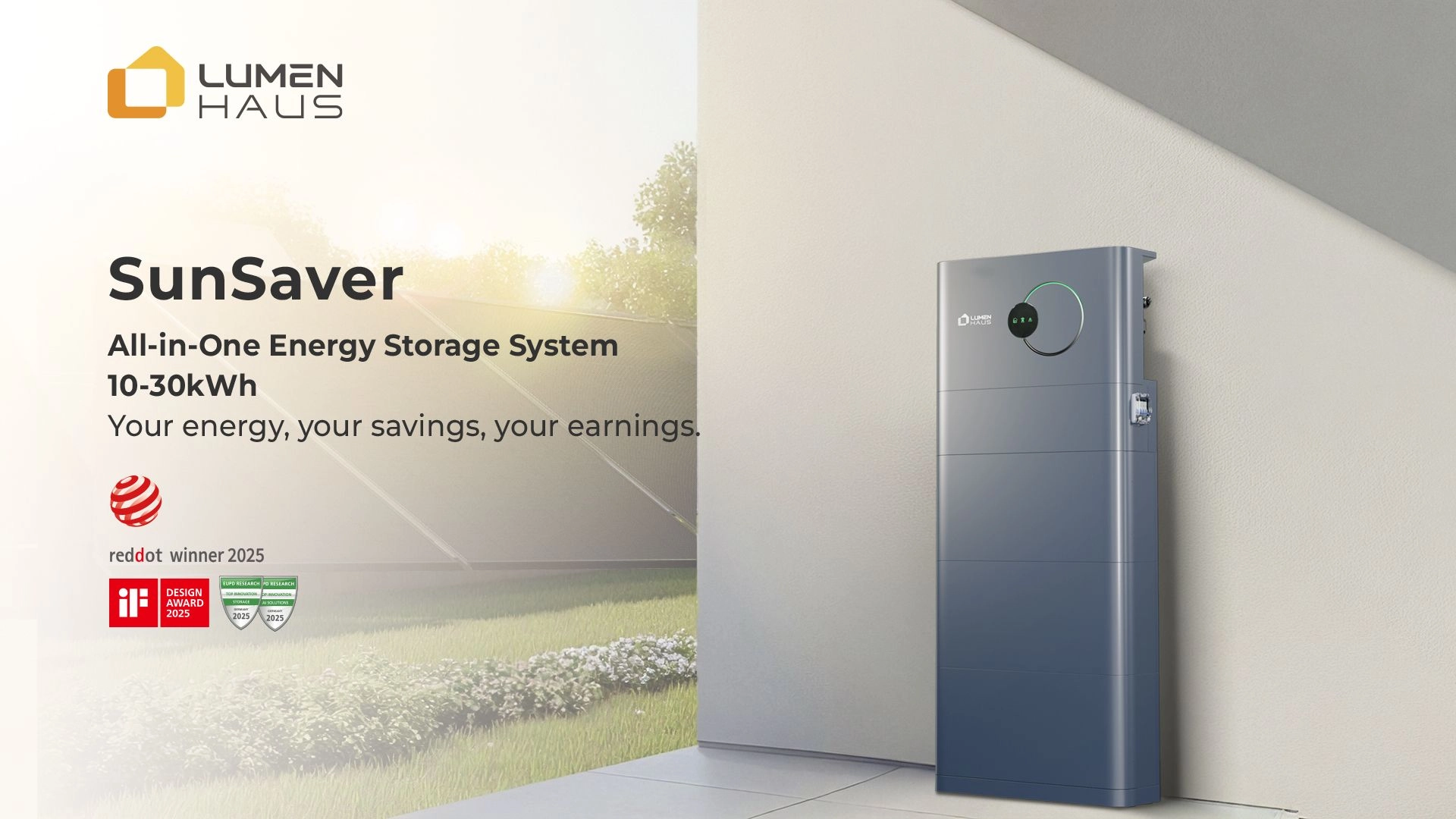
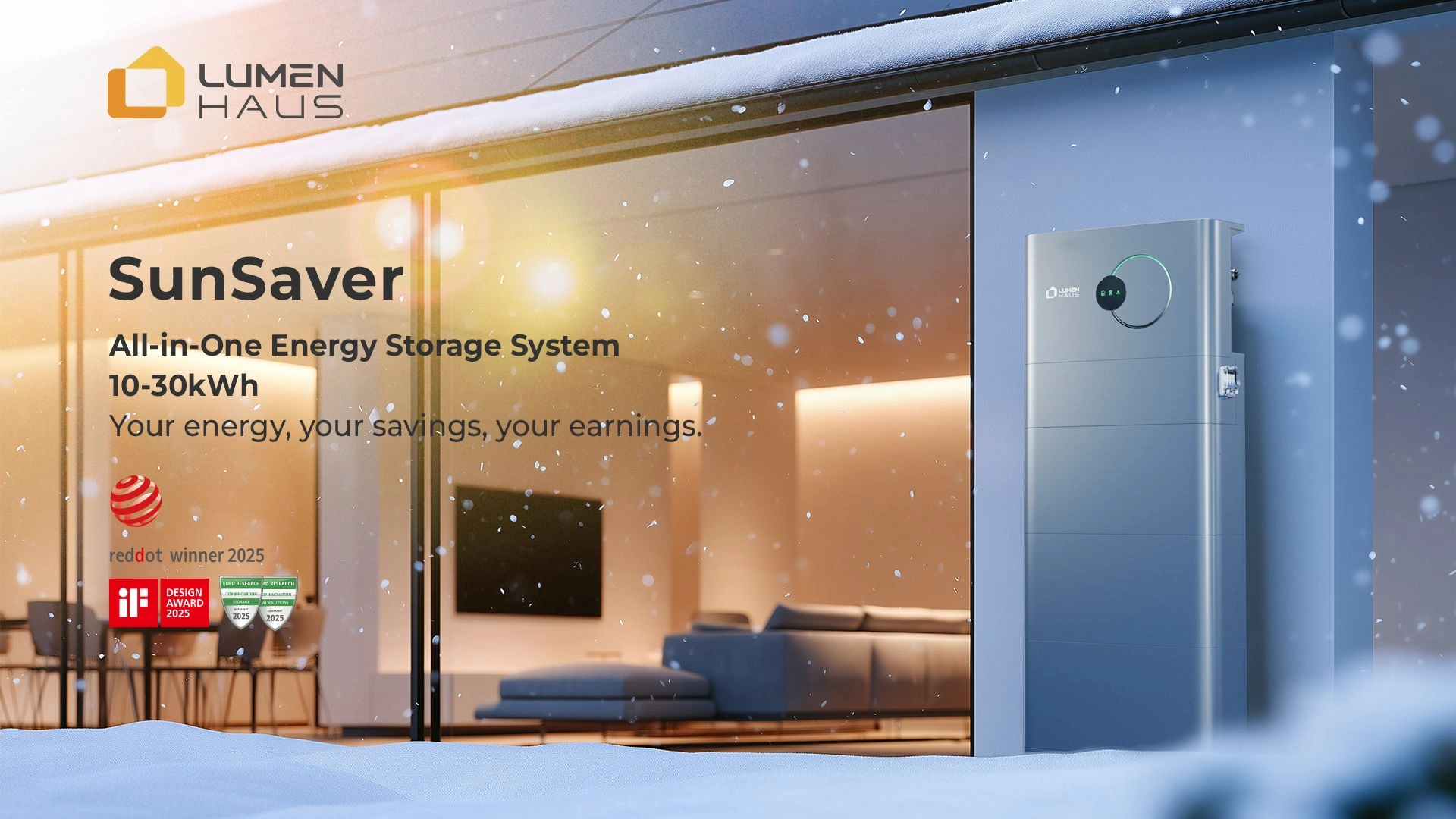
LumenHaus SunSaver is an all-in-one residential energy storage system with modular storage capacity from 10 to 30 kWh, allowing homeowners to plan a configuration that suits their energy needs.
Its value goes beyond storing solar power. Combined with the myLumenHaus App and Smart-Eco intelligent energy management mode, SunSaver can optimise charging and discharging based on weather forecasts, dynamic tariffs, household consumption patterns and battery status.
That’s what actually helps households manage energy more intelligently, and make better use of every kWh available to them.
For German homeowners looking to increase solar self-consumption, reduce grid electricity purchases during expensive periods and prepare for a changing energy landscape, SunSaver is a home storage solution worth taking seriously.
Actual savings depend on household consumption, dynamic tariff structure, system configuration and operating conditions. Homeowners interested in participating in electricity market arrangements under MiSpeL should also verify product configuration, metering requirements and the availability of relevant market services before making assumptions about returns.
Here is What LumenHaus Sees: Giving Homeowners More Control Over Their Energy
MiSpeL marks another step towards more flexible use of energy storage in Germany. For homeowners, the most practical starting point remains making better use of solar power, choosing the right battery capacity and investing in a system that supports intelligent energy management.
With modular battery storage and Smart-Eco intelligent optimisation, LumenHaus SunSaver helps households manage energy more effectively, control electricity costs and prepare for future changes in the energy market.
Contact LumenHaus for a free, personalised energy consultation and find out whether SunSaver is right for your home, solar PV system and future energy needs.