Home Energy Storage System in Germany: How Smart Batteries Work with Dynamic tariff
Most people think of a home battery the way they think of a phone battery. It charges up. It powers things. When it's empty, you charge it again. Simple enough.
As more households in Germany combine solar PV, battery storage, heat pumps and electric vehicle charging, the role of a home battery is expanding beyond simply storing surplus solar electricity.
According to the latest InfoLink Consulting forecast, global residential energy storage additions are expected to reach 46.1 GWh in 2026, with Europe contributing around 15.4 GWh. Mature markets such as Germany, Italy and Austria remain important drivers of this growth.
For German households, the question now goes beyond just how much energy a battery can store. It is also about how the system can coordinate solar generation, household consumption, electricity prices, heating, EV charging and backup power in a smarter way.
Germany’s residential energy storage system market is entering a more flexible phase
Residential batteries in Germany are becoming part of a broader home energy system. They can store surplus solar power during the day, supply household demand in the evening, support heat pumps and EV charging, and respond to changing electricity prices.
This flexibility is becoming more valuable as renewable electricity generation continues to grow. When solar and wind generation is high, electricity prices can fall. When demand increases or renewable generation is lower, prices can rise.
Many German households are therefore looking for energy solutions that can help them:
- Increase solar self-consumption
- Reduce reliance on grid electricity
- Lower long-term energy costs
- Prepare for future heat pump or EV demand;
- Maintain essential power during an outage
The next stage of residential energy storage system is not defined by battery capacity alone. It is defined by how effectively the complete system manages energy throughout the day.
Why residential energy storage system needs to become more intelligent
Many residential battery systems are still made up of several separate components. That can mean more cabling, more installation effort, longer commissioning times, and greater complexity when something eventually needs servicing.
As households add heat pumps, EV chargers and other electrical loads, a battery can no longer be treated as an isolated storage device. The system needs to understand when energy is generated, when it is needed and when electricity is most cost-effective to use.
A more intelligent home energy storage system should be able to:
- Coordinate solar generation, battery storage and household demand
- Respond to electricity prices, weather forecasts and changing consumption patterns
- Provide an interface that makes the system simple to use
This shift is transforming residential storage system from a standalone solar battery into a connected smart energy hub.
Dynamic tariff are changing household energy use
Under a traditional electricity contract, the price usually remains relatively stable throughout the day. Dynamic tariff work differently. They are linked to wholesale market conditions, including prices on the German electricity market.
Prices typically update every 15 minutes, while day-ahead prices are published in advance. When renewable generation is high or demand is low, electricity prices may fall. During periods of higher demand, prices may increase.
This creates opportunities for households that can shift their electricity use. For example, a battery can charge when prices are lower and discharge when prices rise. EV charging or heat-pump operation can also be scheduled for more favourable periods.
However, manually monitoring electricity prices every 15 minutes is neither practical nor convenient for most households. An intelligent home energy management system can continuously analyse:
- market prices
- solar generation forecasts
- weather conditions
- household electricity consumption
- battery state of charge
- heat-pump demand
- EV charging requirements
The system can then determine when to charge the battery, use stored energy, prioritise solar power or operate connected devices.
This is where intelligent automation becomes important.
SunSaver: All-in-One Home Energy Storage System
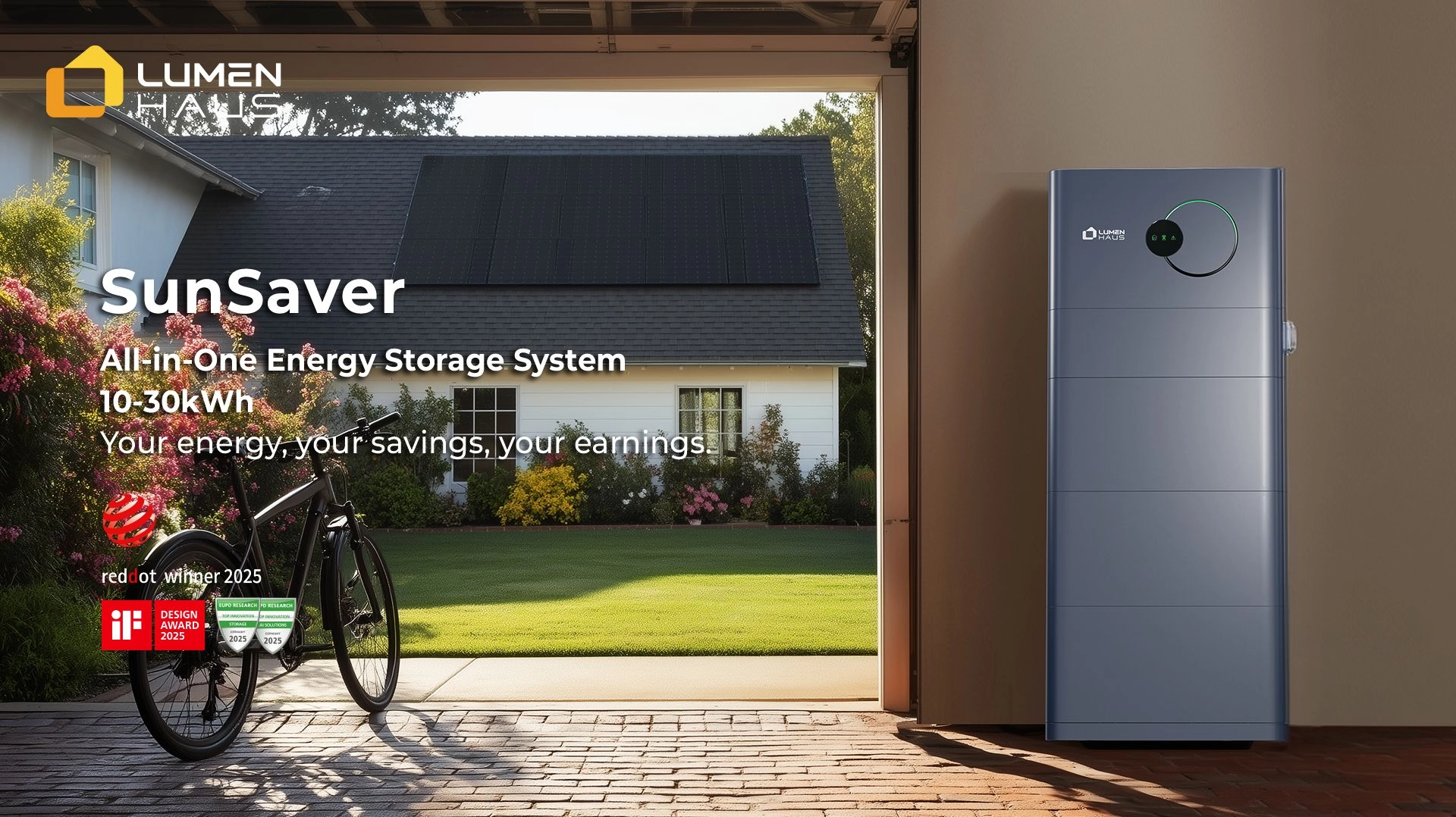
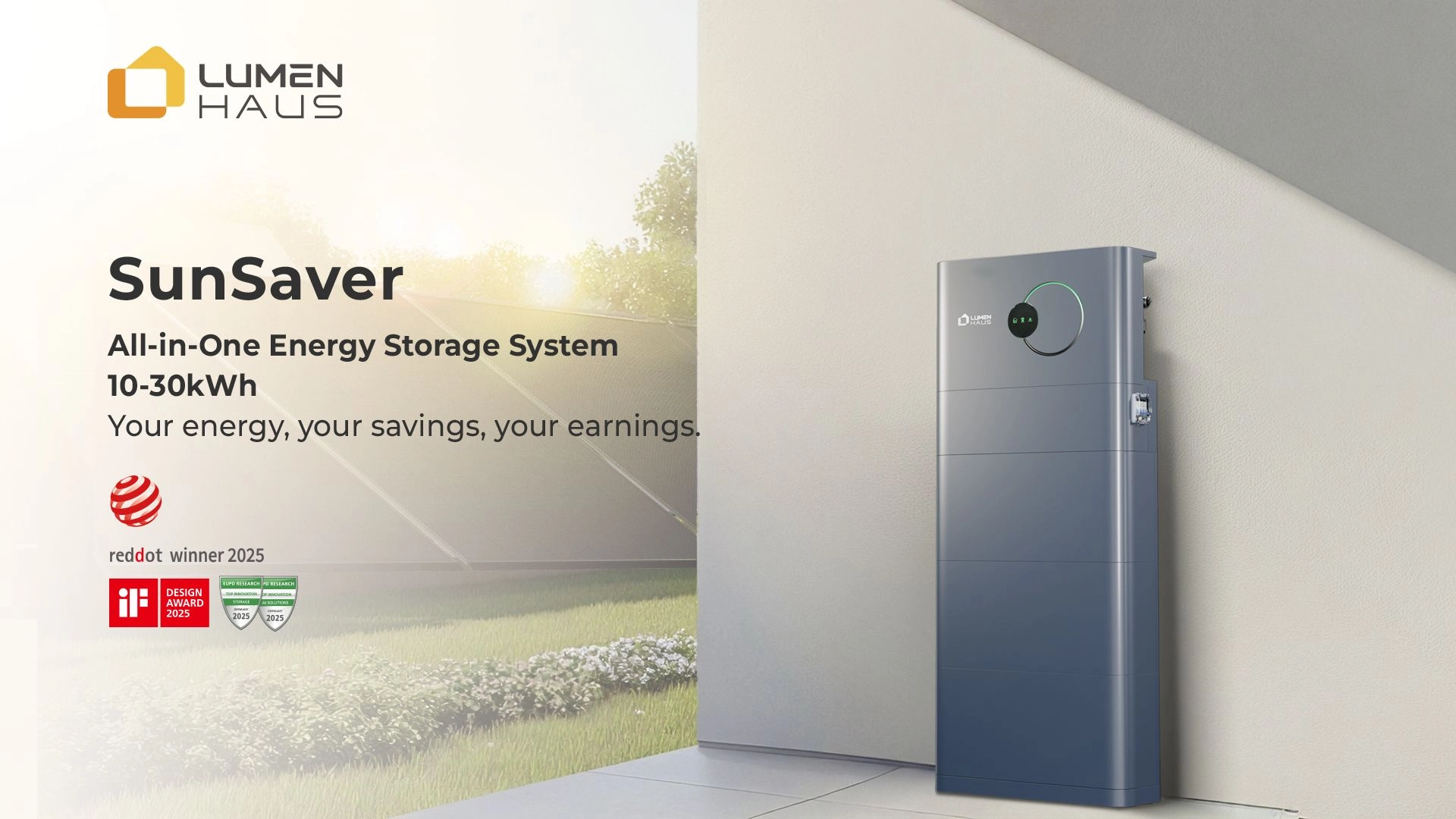
LumenHaus SunSaver is an all-in-one home energy storage system designed for solar self-consumption, dynamic tariff and backup power.
Its integrated architecture brings storage, control and monitoring into one coordinated system. Depending on the site conditions and installation requirements, SunSaver can be installed in areas such as garages, utility rooms, storage areas or basements.
The integrated design helps simplify system planning and daily operation. Instead of managing several separate components independently, homeowners can monitor and manage their connected energy system through myLumenHaus App.
SunSaver is designed to help households use more of the energy they generate, respond to changing electricity prices and prepare for future energy requirements.
Designed for Everyday Household Loads and Higher-Demand Applications
The right home battery system depends not only on storage capacity but also on the type and timing of household loads.
Everyday Household Loads
These typically include:
- Lighting
- Refrigerators
- Entertainment systems
- Internet and network equipment
- Security systems
- Heating circulation systems
These loads are often important for daily comfort, communication and basic household operation.
Higher-Demand Applications
Some homes also need to manage larger or more variable loads, such as:
- Heat pumps
- EV charging
- Larger household appliances
- Multiple household loads operating at the same time
These applications require careful planning of system capacity, power output, electrical connections and backup priorities. A qualified installer should assess the household’s actual consumption and future energy plans before recommending a configuration.
SunSaver Home Energy Storage System: Key Specifications
| Specification | SunSaver |
| System design | All-in-one residential energy storage system |
| Battery core | 314 Ah |
| Lifecycle | Up to 10,000 charge cycles |
| Expandable storage capacity | Up to 30 kWh in a multi-unit configuration |
| AC output | Up to 12 kW in a multi-unit configuration |
| Backup switching | 20 ms UPS-level switching |
| Designed service life | Up to 15 years |
Scalable Storage for Changing Household Needs
Household energy requirements can change over time. A family may install an EV charger, add a heat pump, increase its solar capacity or simply consume more electricity in the future.
For this reason, storage should be planned around both current and future needs. The appropriate configuration depends on:
- Annual and interval electricity consumption
- Solar generation
- Household power requirements
- Planned heating and mobility systems
- Backup priorities
- Available installation space
SunSaver’s modular design allows the system to adapt to changing energy requirements. The final configuration should always be confirmed by a qualified installer based on the home’s actual energy profile and project conditions.
Fast Backup Power for Essential Household Loads
A properly configured SunSaver system can provide backup power for selected critical loads during a grid outage.
Depending on the installation, these may include essential lighting, refrigeration, internet equipment, security systems or heating circulation systems. The exact loads that remain powered, as well as the backup duration, depend on the selected configuration, wiring, connected equipment and available battery energy.
SunSaver should therefore be understood as a configurable backup solution. Whole-home backup is not automatic and must be planned as part of the electrical design.
AI-Powered Energy Optimization through the myLumenHaus App
The myLumenHaus App provides a central interface for viewing and managing compatible home energy devices.
Depending on the connected system, homeowners can monitor:
- Household electricity consumption
- Solar power generation
- Battery charging and discharging
- Energy flows
- Overall system performance
This information makes it easier to understand how energy is produced, stored and used throughout the day.
When solar generation, storage, heating and EV charging are connected within one ecosystem, the system can coordinate different energy assets instead of treating each device separately.
Smart-Eco Mode Makes Dynamic Tariff Easier to Use
Smart-Eco Mode uses energy data and forecasts to optimise the operation of compatible devices.
It analyses factors such as:
- Household electricity consumption
- Solar generation forecasts
- Dynamic tariff
- Battery status
- Expected energy demand
Based on this information, Smart-Eco Mode can:
- charge the battery during lower-price periods;
- store surplus solar electricity for later use;
- prioritise stored or solar energy when prices increase;
- coordinate compatible heating and EV charging;
- reduce the need for manual energy management.
The purpose of Smart-Eco Mode is not simply to show electricity prices. It is to help households respond to those prices automatically and use energy more efficiently.
Lumi enables a More Natural Way to Interact with Energy
Lumi is the intelligent assistant within the myLumenHaus App experience. It provides a more natural way for homeowners to ask questions about their energy system and access relevant information.
For compatible devices and supported functions, Lumi can help users understand energy flows, review system information and interact with selected controls using natural language.
This makes home energy management easier to understand, especially as households connect more devices and energy services. The available functions depend on the connected products, system configuration and software support.
The Future of Home Energy
Germany’s energy transition is changing how households produce, store and use electricity. Solar power, battery storage, heat pumps, EV charging and dynamic tariff are increasingly being managed as one connected home energy system.
The value of home energy storage therefore depends not only on its capacity, but also on how effectively it coordinates solar generation, household demand, electricity prices and backup priorities. LumenHaus SunSaver combines scalable storage with intelligent energy management through the myLumenHaus app, helping homeowners use more of their solar energy with less manual effort. The right configuration depends on each home’s electricity use, solar generation and future energy needs.
FAQ
What is home energy storage?
Home energy storage stores electricity generated by solar panels or purchased from the grid so that it can be used later. It can help households increase solar self-consumption and reduce reliance on grid electricity.
How do dynamic tariff work with a home battery?
Dynamic tariff change according to market conditions. Prices are typically updated every 15 minutes, with day-ahead prices published in advance. A smart home energy system can charge the battery during lower-price periods and use stored energy when prices rise.
How much storage capacity does a home need?
The right capacity depends on household electricity use, solar generation, power requirements, future heat-pump or EV demand and backup priorities. A qualified installer should size the system using the home’s actual energy profile.
Can a home battery support heat pumps and electric vehicles?
Yes. A home battery can support heat pumps and EV charging, subject to the system’s output, electrical design, inverter configuration and the requirements of the installation.
Does home energy storage provide whole-home backup?
Not automatically. Backup can be planned for selected critical loads, such as lighting, refrigeration, internet equipment or security systems. The supported loads and backup duration depend on the system configuration, wiring and available battery energy.
Explore a smarter home energy system
Every home has a different energy profile. Discover how LumenHaus SunSaver can be configured around your electricity use, solar generation and future energy needs.