Germany’s Electricity Prices in 2026: Why More Households Are Turning to Home Battery Storage
For many households in Germany, electricity has become one of the most noticeable increases in monthly living costs.
According to the latest data from the European Commission and Eurostat (second half of 2025), the average household electricity price in Germany was around €0.39 per kWh including taxes and levies. This is significantly above the EU average of approximately €0.29 per kWh, placing Germany among the countries with the highest household electricity prices in Europe.
For a typical household using around 5,000 kWh of electricity per year, this price difference can mean approximately €450–500 more in annual electricity costs compared with the EU average level.
At the same time, Germany’s residential battery storage system market is growing rapidly.
According to Battery Charts by RWTH Aachen University (data as of July 2, 2026), Germany’s installed battery storage capacity has reached around 29.8 GWh, increasing by approximately 37% compared with 21.8 GWh in June 2025. Residential battery storage systems account for around 75% of total installed capacity, making households the main driver of Germany’s battery storage expansion.
But why are electricity prices in Germany still so high despite the rapid growth of renewable energy?
And can a home battery storage system really help households reduce their electricity costs?
Why Is Home Battery Storage System Growing So Quickly in Germany?
High electricity prices are encouraging more German homeowners to take greater control of their energy consumption.
And LumenHaus is ready to take lead. Instead of simply buying electricity from the grid whenever they need it, households are increasingly looking for ways to generate, store and use their own energy more efficiently with myLumenHaus App.
Home battery storage system has become one of the fastest-growing solutions.
According to Battery Charts data: Germany’s installed battery storage capacity reached around 29.8 GWh by July 2026; total capacity increased by around 37% compared with June 2025; residential systems represent approximately 75% of installed capacity.
These figures show that home batteries are no longer a niche product for a small group of solar enthusiasts. For many German households, battery storage is becoming a practical addition to a residential PV system.
Dynamic Tariffs Are Changing How German Households Use Energy
Another major development in Germany’s energy market is the growing adoption of dynamic tariffs.
Traditional electricity contracts usually charge households a fixed price per kilowatt-hour, regardless of when electricity is consumed.
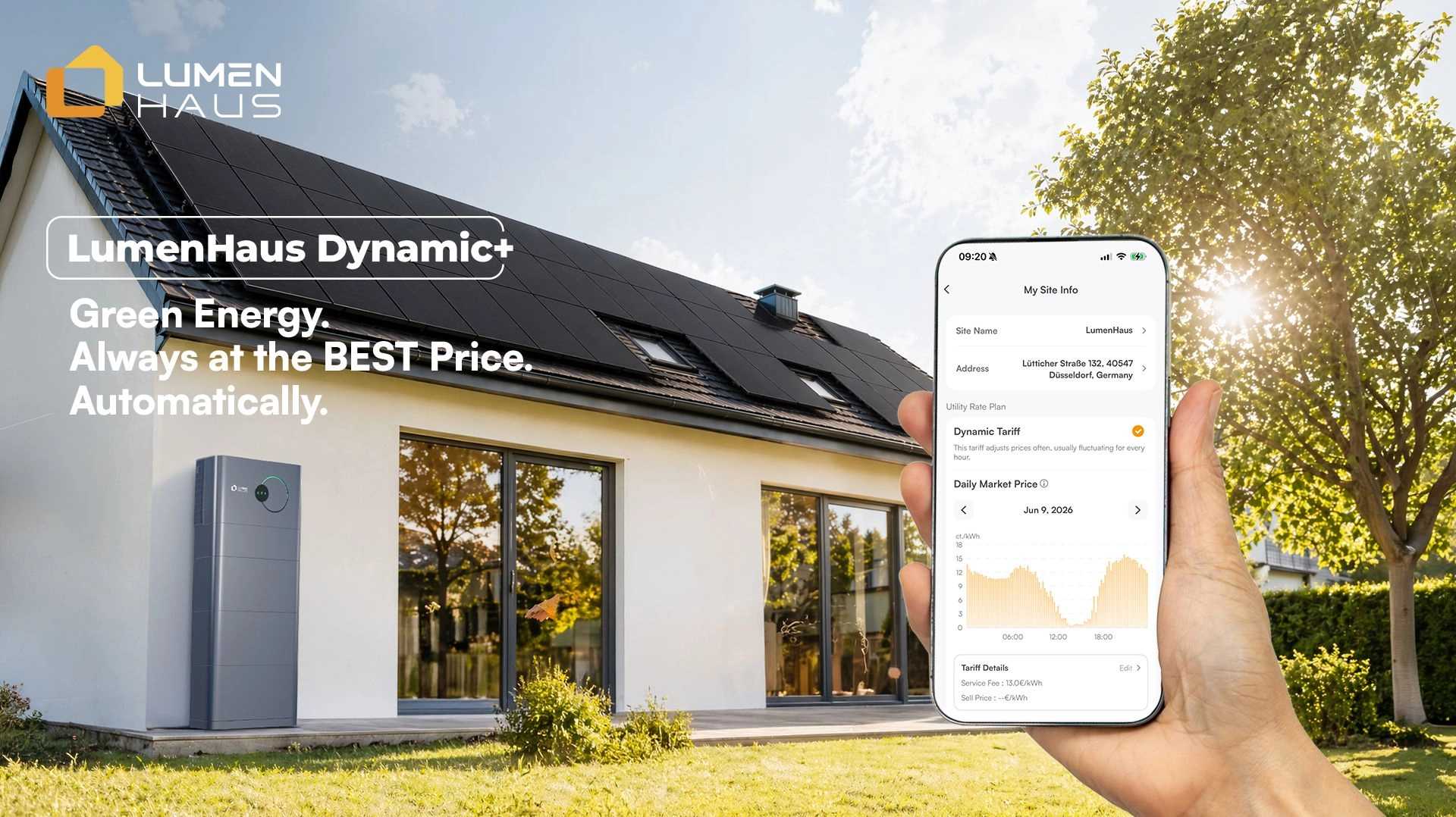
Dynamic tariffs work differently. Prices change according to real-time conditions in the electricity market, reflecting changes in supply and demand.
When renewable energy generation is high, for example during periods with strong wind or solar production, electricity prices can be lower. When demand increases or renewable generation is limited, prices may rise.
For households, this means that electricity costs are no longer only determined by how much energy they use, but also by when they use it.
Smart Battery Storage Helps Households Manage Energy Costs More Efficiently
The development of dynamic tariffs is increasing the importance of intelligent energy management systems (HEMS).
A traditional battery storage system mainly stores electricity.
A modern home battery storage system does much more. By combining battery storage with smart software, it can analyze:
- household electricity consumption patterns;
- solar production forecasts;
- weather conditions;
- battery status;
- electricity price changes.
Based on this information, the system can automatically optimize when to charge and when to use stored energy.
For example:
When electricity prices are low, the battery can charge.
When electricity prices are high, the household can use stored energy instead of buying expensive electricity from the grid.
Weather forecasts can also improve energy planning. If sunny weather is expected, the system can adjust charging strategies based on higher solar production. If several cloudy days are forecast, it can prepare by maintaining a higher battery level.
This means the future value of home battery storage is not only about storing electricity. It is about helping households use energy at the right time and in the most cost-effective way.
The Future German Home Energy System Will Be More Connected
Germany’s energy transition is changing the way households generate, store and use electricity.
A modern home energy system brings together different technologies, including solar PV, battery storage, heat pumps, electric vehicle charging and intelligent energy management platforms. By connecting these technologies, households can better match energy generation with consumption and make greater use of locally produced renewable electricity.
For example, a heat pump can run more efficiently when it uses electricity generated from the home’s own solar system. An electric vehicle can be charged when electricity prices are lower or when surplus solar energy is available.
Battery storage helps connect these different energy technologies by balancing electricity supply and demand, allowing households to use renewable energy more efficiently and reduce their reliance on grid electricity.
Energy Sharing Could Create New Opportunities for Local Solar Use
Another development in Germany’s energy transition is the introduction of new possibilities around energy sharing.
The idea is to allow locally generated renewable electricity to be used more flexibly within communities, reducing barriers for households that want to benefit from nearby renewable generation.
Battery storage can support these models by helping to:
- store solar electricity when it is not immediately needed;
- improve local energy utilization;
- balance differences between electricity generation and consumption.
In the future, home battery systems may therefore play a role not only for individual households but also within broader distributed energy networks.
LumenHaus SunSaver: Smart Home Battery Storage Designed for the Future of Energy
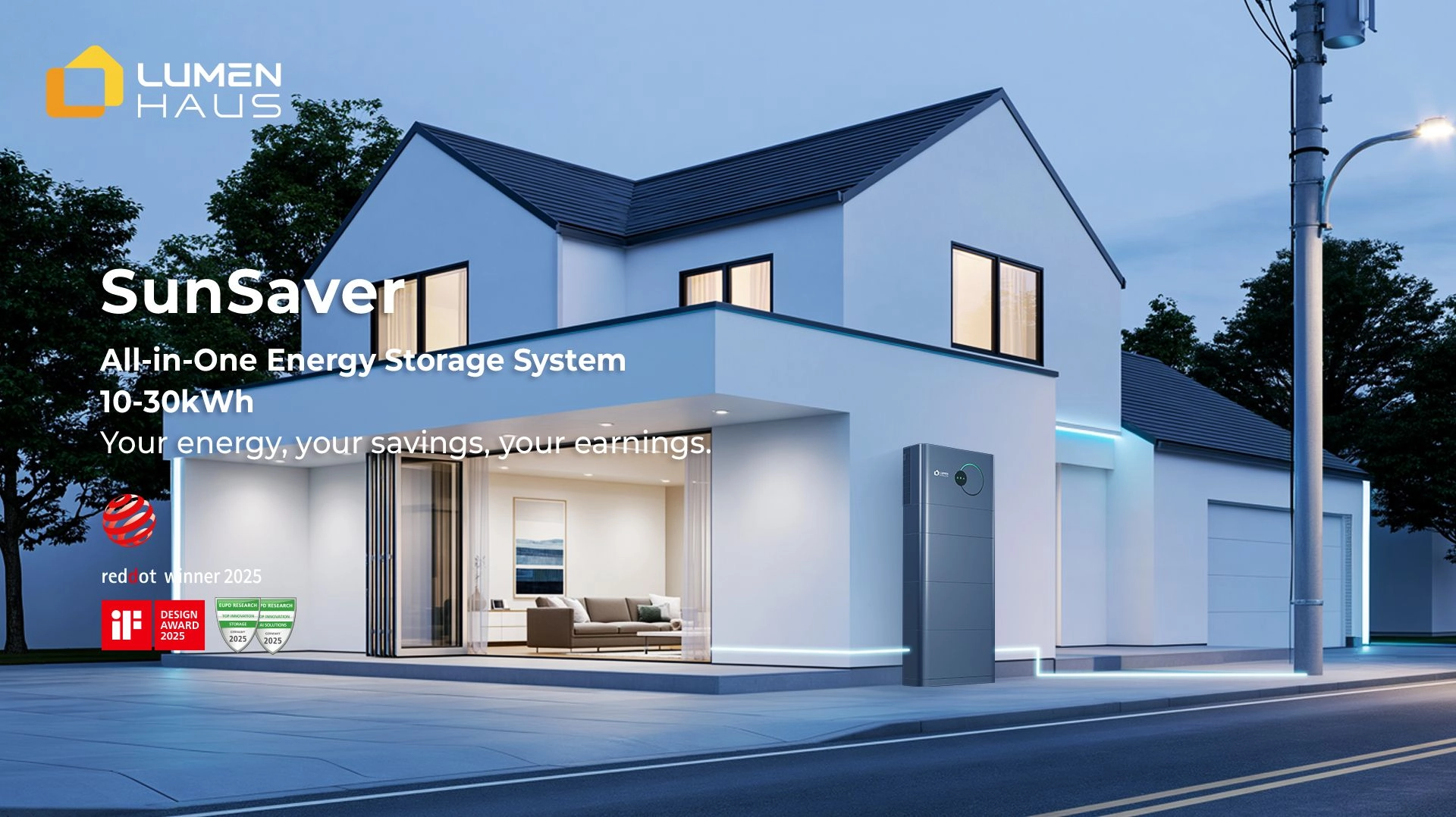
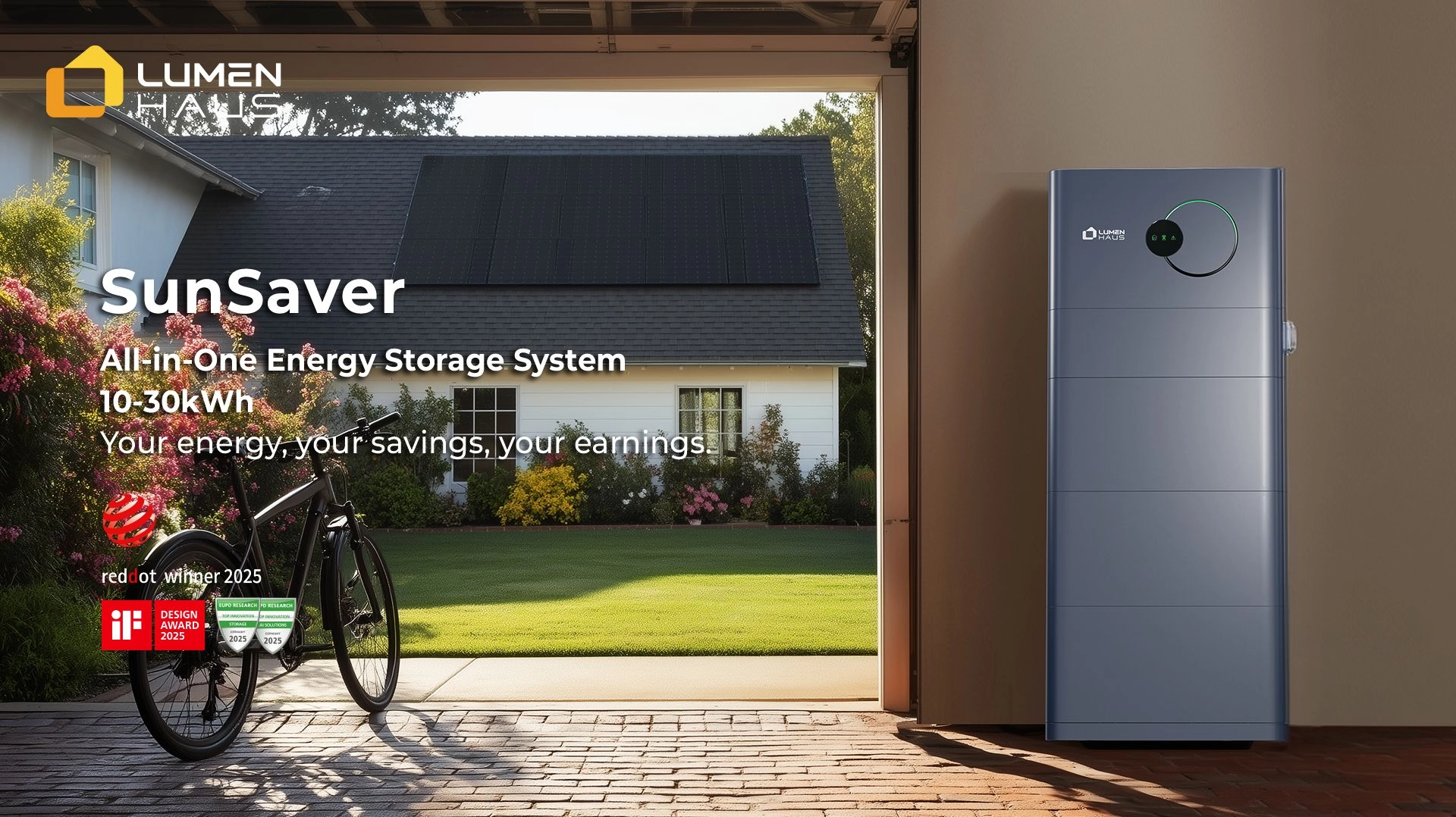
As Germany’s energy market continues to evolve, LumenHaus SunSaver All-in-One ESS is designed to help households better manage their solar energy, battery storage and future energy needs.
SunSaver offers a modular storage capacity from 10 to 30 kWh, allowing homeowners to adapt the system according to their current requirements and future plans.
The system uses residential-grade LFP battery technology and is designed for long-term reliability, with a lifecycle of up to 8,000 cycles.
SunSaver also supports fast backup switching with a transfer time of less than 20 milliseconds, helping maintain power supply for essential household devices during grid interruptions.
More Than Battery Storage. Through the myLumenHaus App, homeowners can monitor their complete energy flow, including:
- solar generation;
- battery status;
- household consumption;
- energy usage patterns.
With AI-powered Smart-Eco Mode, the system can optimize charging and discharging decisions based on:
- weather forecasts;
- dynamic tariffs;
- household consumption behavior;
- battery conditions.
For example:
During periods of strong solar generation, the system can prioritize using and storing renewable energy produced by the home.
When electricity prices increase, stored energy can be used to reduce grid consumption.
As households add technologies such as heat pumps or EV chargers, intelligent energy management helps coordinate different energy sources more efficiently.
For homeowners looking to reduce long-term electricity costs and build a more flexible energy system, smart battery storage is becoming an increasingly valuable investment.
Is Home Battery Storage Worth Investing in Germany in 2026?
For many German households, the answer is increasingly yes.
Several trends are coming together:
- electricity prices remain high compared with many European countries;
- residential solar installations continue to grow;
- dynamic electricity tariffs are becoming more available;
- smart energy management technology is becoming more advanced.
Together, these developments are changing the role of home battery storage.
A battery system is no longer simply a device that stores excess solar electricity.
It is becoming an important part of a modern home energy strategy, helping households:
- reduce dependence on expensive grid electricity;
- increase solar self-consumption;
- connect solar, heating and electric mobility into one system.
The future of residential energy will not only depend on producing more electricity.
It will depend on using energy more intelligently.
Contact LumenHaus today to receive a free, personalized energy assessment and discover the right solution for your home.