Home Battery Buyer's Guide 2026: How to Choose the Right Home Solar Battery System in Germany
Rising electricity prices, grid congestion, and the rapid expansion of rooftop photovoltaics have transformed the way German homeowners approach energy use. In 2026, the key question for homeowners is this:
Is a home battery storage system worth it—and how can you choose the right one?
If you want to increase self-consumption, reduce dependence on the public grid, and protect your home against outages and peak pricing, a solar battery is no longer a niche upgrade. It is rapidly becoming an essential part of modern residential energy systems.
This guide explains what home battery storage systems do, how they work, and—most importantly—how to choose the right solar storage systems in Germany in 2026.
What Is a Home Solar Battery Storage System?
Also known as a residential energy storage system, a home solar battery storage system stores excess electricity generated by your photovoltaic (PV) system so it can be used later—when the sun isn’t shining, electricity prices are high, or the grid is unavailable.
Instead of exporting surplus solar power to the grid for a relatively low feed-in tariff, a battery storage system allows you to consume more of your own clean energy. This increases self-sufficiency, reduces electricity bills, and improves resilience.
Modern battery systems can operate in:
- Grid-connected systems (the most common in Germany)
- Hybrid systems with backup power
- Off-grid systems for complete independence
How Does a Home Solar Battery System Work?
During the day, your PV system produces electricity. Your home uses what it needs in real time. Any surplus energy flows into the battery instead of being fed into the grid.
Later—at night, during cloudy weather, or when electricity prices spike—the battery discharges and supplies power to your home. In systems with backup capability, the battery can also power essential loads during grid outages. This is the standard operating model for solar battery systems in Germany.
Advanced residential solar battery systems go a step further by actively optimizing charging and discharging based on:
- Forecasted solar power generation
- Household consumption
- Electricity price signals
- Grid conditions
This is where intelligent energy management becomes a decisive factor.
Why Home Battery Storage Is Becoming Essential in Germany
- Energy Independence
Battery storage systems reduce reliance on the public grid and protects households from rising electricity prices and supply uncertainty.
- Financial Savings
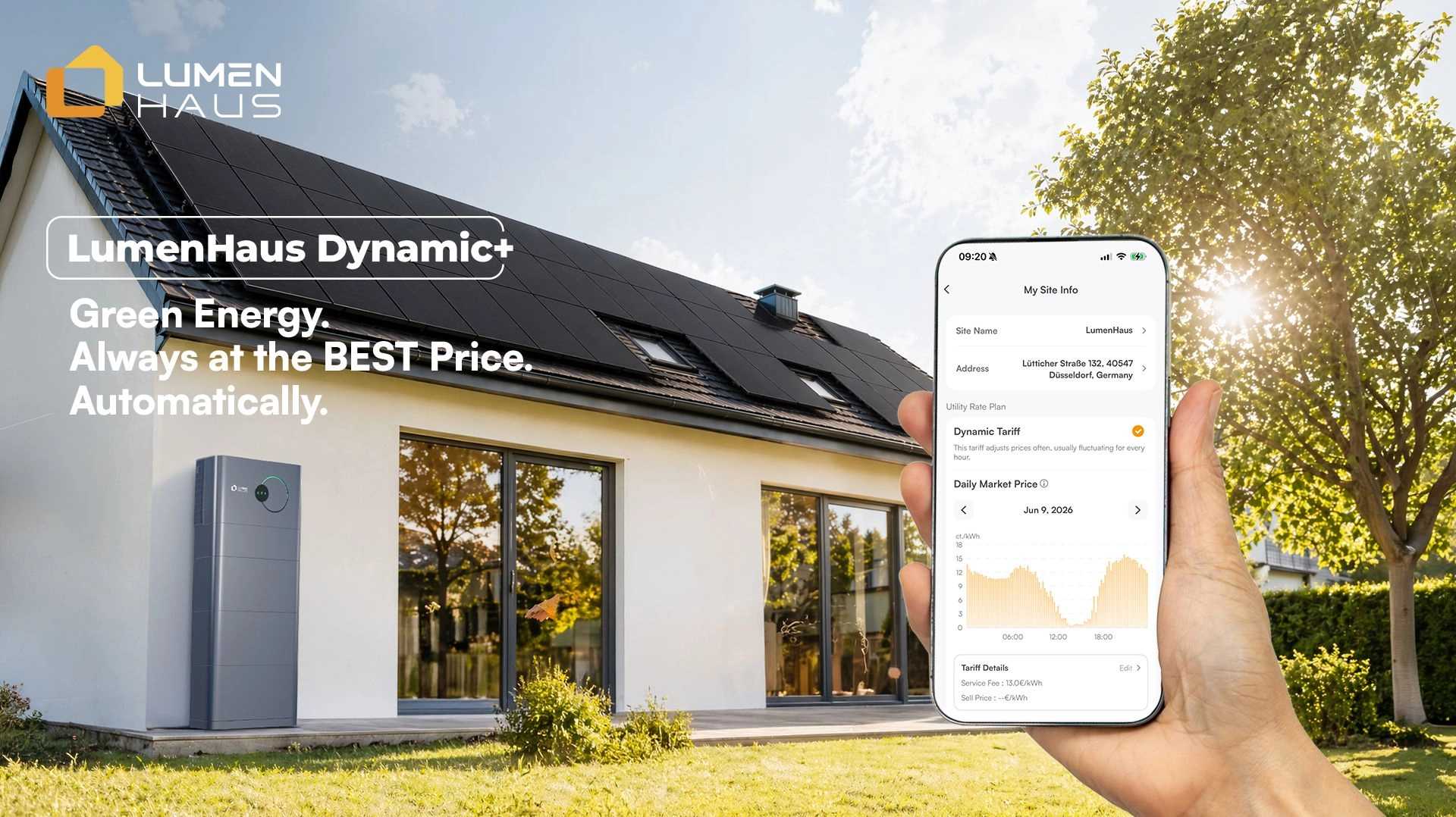
While batteries require upfront investment, long-term savings can be substantial—especially under dynamic tariffs that are expanding across Germany.
- Sustainability
Using stored solar energy reduces fossil fuel demand and lowers household carbon emissions.
- Grid Stability
On a system level, distributed battery storage systems help smooth peak demand and stabilise the grid—an increasingly important role as renewable penetration rises.
Key Factors to Consider When Buying a Solar Battery System in Germany in 2026
The market is crowded, and not every feature adds real value. Typical guidance for German households:
Battery Capacity – How Much Storage Do You Really Need?
Battery capacity is measured in kilowatt-hours (kWh) and determines how much energy can be stored.
Typical guidance for German households:
- 5–10 kWh: Small households, partial backup, low consumption
- 10–20 kWh: Medium-sized homes with higher evening usage
- 20+ kWh: Large households, heat pumps, EV charging, or high self-sufficiency goals
The right size depends on annual electricity consumption, PV system size, and future electrification plans.
Power Output – What Can the Battery Supply at Once?
Power output (kW) defines how many appliances can run simultaneously.
- 3–5 kW: Essential loads (lighting, refrigeration, IT)
- 5–10 kW: Typical household appliances
- 10+ kW: High-demand loads such as heat pumps or multiple appliances running in parallel
A battery with insufficient power output may store enough energy but still fail to support key appliances.
Depth of Discharge (DoD)
Depth of Discharge indicates how much of the battery’s nominal capacity can be used regularly without accelerating degradation.
In 2026, high-quality lithium-based systems typically offer 90% or higher DoD, making nearly the full capacity usable in practice.
Efficiency and System Losses
Round-trip efficiency measures how much energy remains after charging and discharging the battery.
Efficient battery storage systems minimize conversion losses and play an important role in long-term economics, especially under dynamic pricing conditions.
Lifespan, Cycles, and Warranty
Battery systems are long-term investments. Look for:
- Long warranty periods
- High cycle life
- Clear performance guarantees over time
This ensures predictable performance and financial planning security.
Intelligent Energy Management
In Germany’s evolving energy landscape, software matters as much as hardware.
Modern battery storage systems should have smart home energy management system offer:
- Real-time monitoring
- Consumption analytics
- Forecast-based optimization
- Integration with heat pumps, EV chargers, and dynamic tariffs
Without intelligent control, much of a battery’s potential remains unused.
Is a Home Battery Storage System Right for You?
A battery system is particularly worthwhile if:
- You want to maximize self-consumption
- Electricity prices are a concern
- You plan to install or already use a heat pump or EV charger
- You value backup power and resilience
- You aim for long-term energy independence
For many German households, batteries are no longer a “nice-to-have” but a strategic investment.
Why LumenHaus SunSaver Is Designed for the German Market
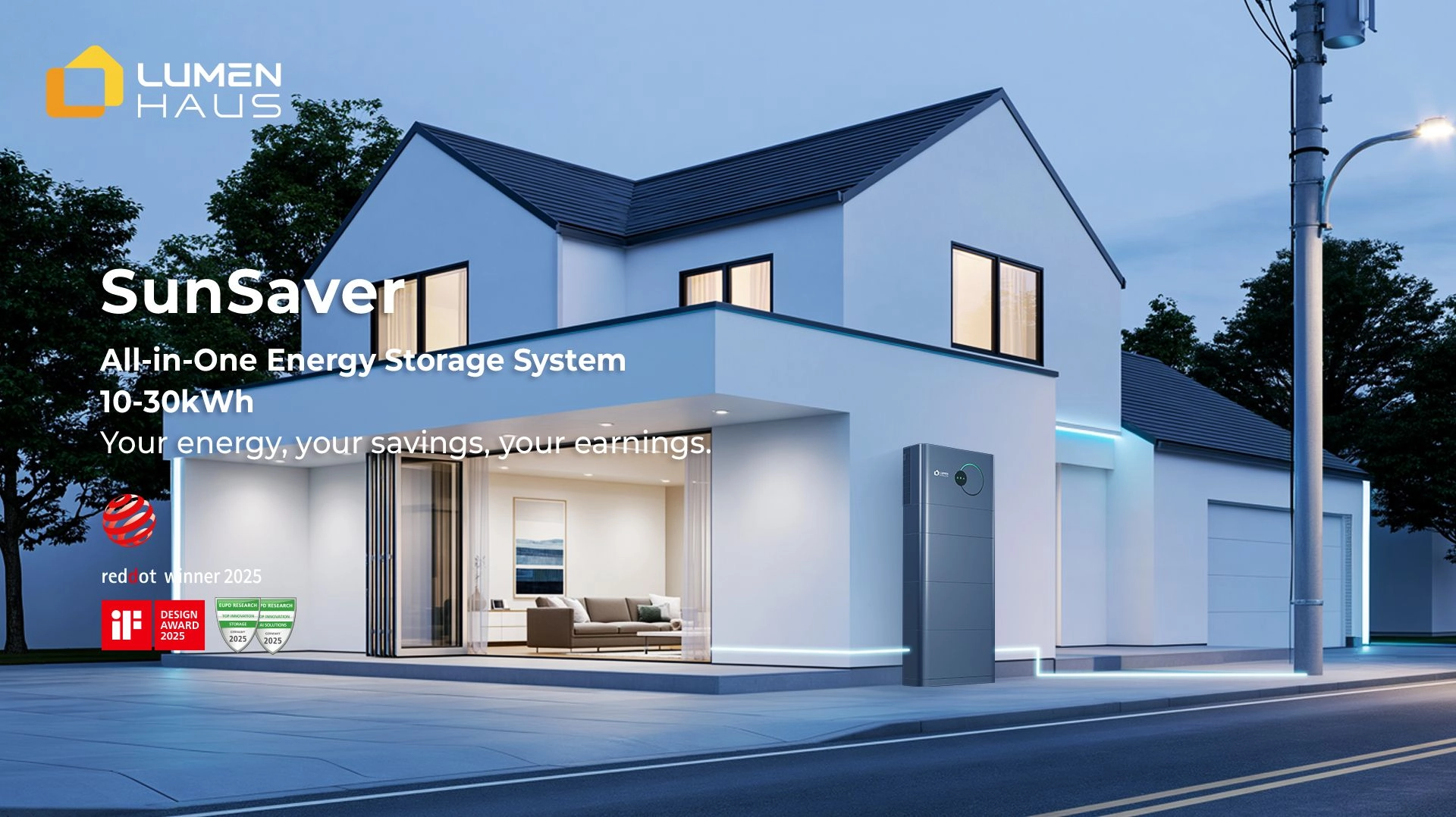
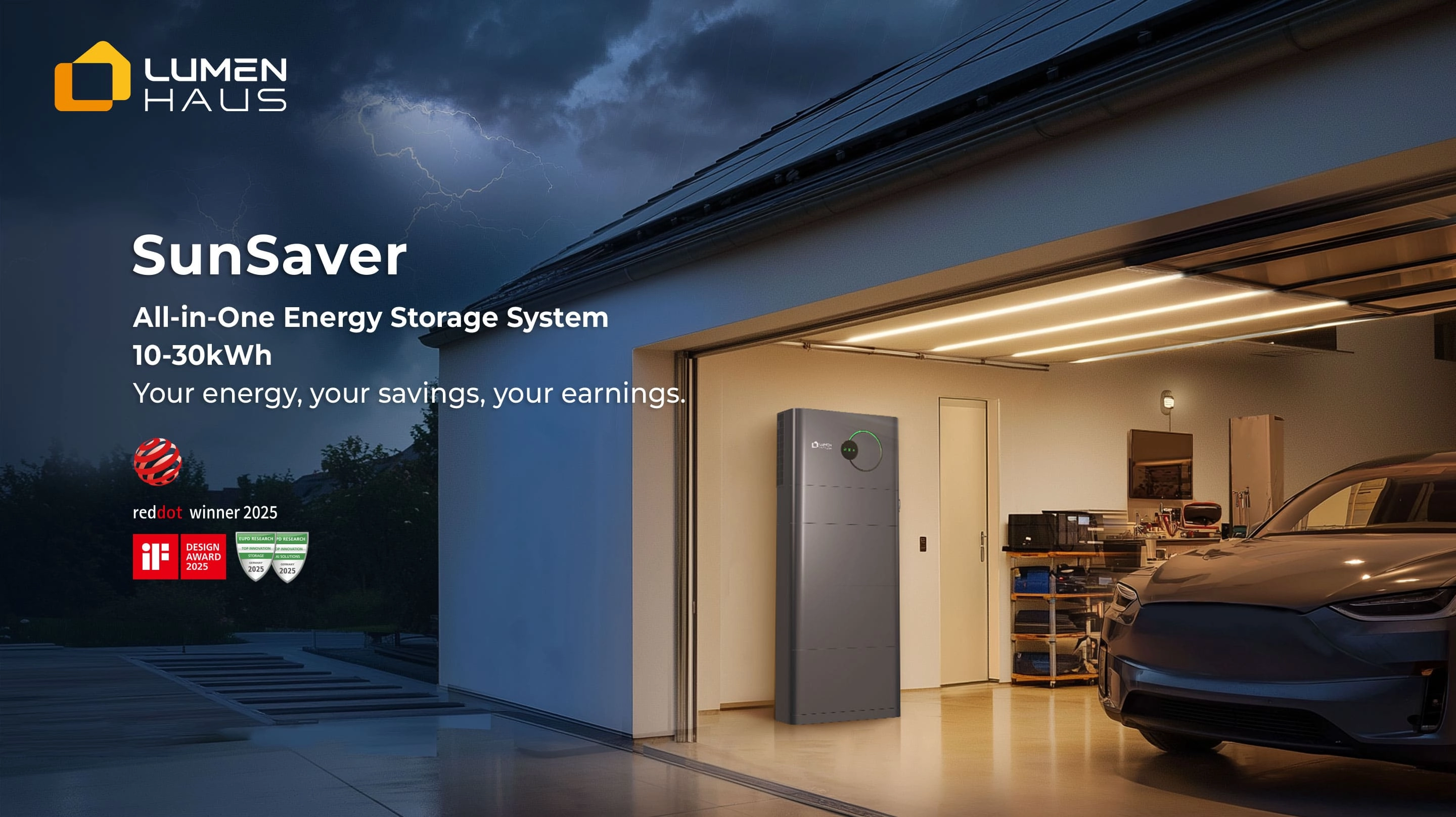
SunSaver is a fully integrated home battery storage system designed specifically for German households. As a pioneer in integrated home energy solutions, LumenHaus combines advanced technology with award-winning industrial design. SunSaver All-in-One Energy Storage System has received both Red Dot and iF Design Awards, reflecting its focus on aesthetics, usability, and quality.
Beyond appearance, SunSaver is built around a fully integrated system architecture that combines power electronics, battery modules, and an intelligent energy management system in a single compact unit. Its modular design allows flexible expansion from 10 to 30 kWh, adapting to changing household needs.
In the event of a grid outage, SunSaver switches to backup mode within milliseconds, ensuring uninterrupted power supply for essential household loads. Through the myLumenHaus App, users gain full visibility and control over their energy system, supported by AI-driven optimization and personalized energy insights.
Conclusion: A Smarter Way to Use Solar Energy in 2026
In Germany’s energy market, battery storage systemhas become the key to unlocking the full value of residential photovoltaics. It increases self-consumption, reduces grid dependence, and provides long-term economic and environmental benefits.
Buying a home battery storage system in 2026 doesn’t require guesswork. Start with your actual energy needs, focus on system efficiency and intelligent control, and choose a solution designed for the realities of the German market.
Book your free consultation today and discover how SunSaver can maximize your solar investment and energy independence.