Home Energy Storage Systems in Germany: Lower Electricity Bills and Greater Energy Security(2026 Guide)
Electricity bills in Germany have remained a persistent concern in recent years. As costs remain volatile across the European energy market, more homeowners are actively looking for ways to reduce electricity bills, increase self-sufficiency, and gain greater control over their energy consumption.
In this context, solutions such as home battery storage in Germany, solar energy storage systems, and smart home energy management are rapidly gaining attention. Rather than relying solely on the grid, households are beginning to optimize how and when electricity is used—storing solar power, avoiding peak tariffs, and improving overall energy efficiency.
Among these solutions, home energy storage systems are emerging as one of the most practical and scalable options. According to a survey by BSW Solar, battery storage is the most preferred technology for supporting renewable energy use among German consumers. As the energy landscape continues to evolve in 2026, storage is no longer just an add-on to solar—it is becoming a key enabler of cost control, flexibility, and long-term energy independence.
Germany’s Energy Transition in 2026: Why Enery Storage System Is Becoming Essential
Germany’s energy system is undergoing structural transformation. Rising electricity prices, regulatory adjustments and the continued expansion of renewable energy are reshaping how households generate and consume power.
Solar panel installations are picking up speed across the country. In North Rhine-Westphalia, a solar obligation (Solarpflicht) has been in effect for major roof renovations since January 2026. Other federal states are either following suit or actively debating it.
At the same time, revisions to the Renewable Energy Act (EEG) are expected to gradually reduce the attractiveness of fixed feed-in tariffs for new solar systems. As EU approval for current remuneration mechanisms expires, future PV systems will rely more heavily on self-consumption and market-based electricity models.
This marks a clear shift in economic logic:
- Exporting solar electricity to the grid becomes less profitable
- Maximising on-site consumption becomes more valuable
- Intelligent energy management becomes essential
In this new environment, battery storage is no longer optional — it is increasingly central to residential energy strategy.
How Does Home Energy Storage Systems Cut Your Electricity Bills?
Here's the simple version. Your solar panels generate electricity during the day — often more than you can use while you're at work, running errands, or just not home. Without storage, that surplus gets exported to the grid, usually for less than what you'd pay to buy it back later.
In addition, more and more electricity suppliers in Germany are offering dynamic tariffs. Prices fluctuate depending on demand and availability. Battery systems can respond automatically to these signals, charging when electricity is cheap and discharging during expensive peak periods. This form of peak load management can noticeably reduce monthly electricity costs.
For many households, the result is not complete energy independence, but a substantial reduction in grid consumption and greater cost predictability over the long term.
Security of Supply and Backup Power
Grid outages in Germany aren't exactly common. But they do happen — a nasty storm, some unexpected construction work nearby, a technical fault down the line. And when they do, most households have no choice but to wait for power restoration.
A battery system with backup capability doesn't wait. It switches over within milliseconds, AUTOMATICALLY, keeping your lights on, your fridge running, your heating controls active. No generator noise, no manual switching.
For most homeowners, this isn't really about preparing for worst-case scenarios. It's simpler than that. It's just the quiet confidence of knowing your home keeps working, regardless of what's happening on the grid.
Environmental Effects Beyond Cost Savings
From a climate perspective, battery storage system increases the effective use of renewable electricity. Instead of exporting surplus solar power during midday hours and drawing grid electricity later, households consume a higher share of their own renewable generation.
Studies show that this can reduce household-related carbon emissions by several percentage points, depending on the local grid mix and consumption patterns. More importantly, distributed storage helps reduce peak loads on the grid, supporting system stability as renewable generation continues to expand.
Energy Sharing from 2026: A New Use Case for Storage
Another relevant development is the introduction of local energy sharing. From June 2026, homeowners will be allowed to sell solar electricity directly to neighbours under simplified conditions. This model reduces administrative hurdles and creates new revenue opportunities for PV owners.
Battery storage systems play a supporting role here as well. Stored electricity can be supplied more flexibly and reliably within a neighbourhood, increasing the economic value of locally generated solar power.
How to Choose the Right Home Energy Storage System
Selecting a battery storage system should start with a realistic assessment of household consumption. Key factors include daily electricity use, expected solar generation, desired backup duration and future expansion plans.
System efficiency, safety certifications and the possibility to add capacity later are equally important. In Germany, professional planning and installation are strongly recommended, not least to ensure compliance with technical standards and eligibility for funding programmes.
LumenHaus SunSaver: An Intelligent Storage Solution for German Households
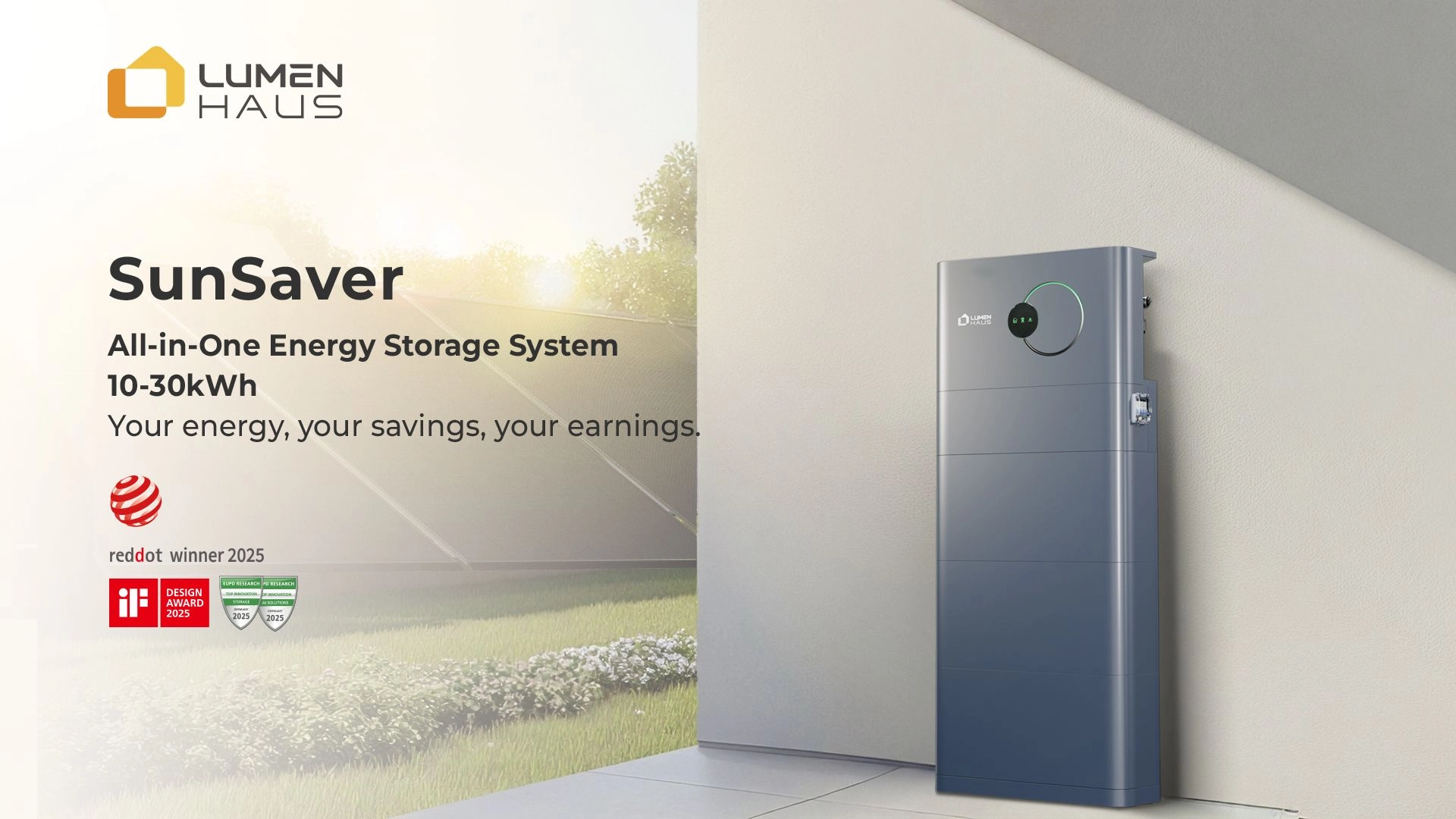
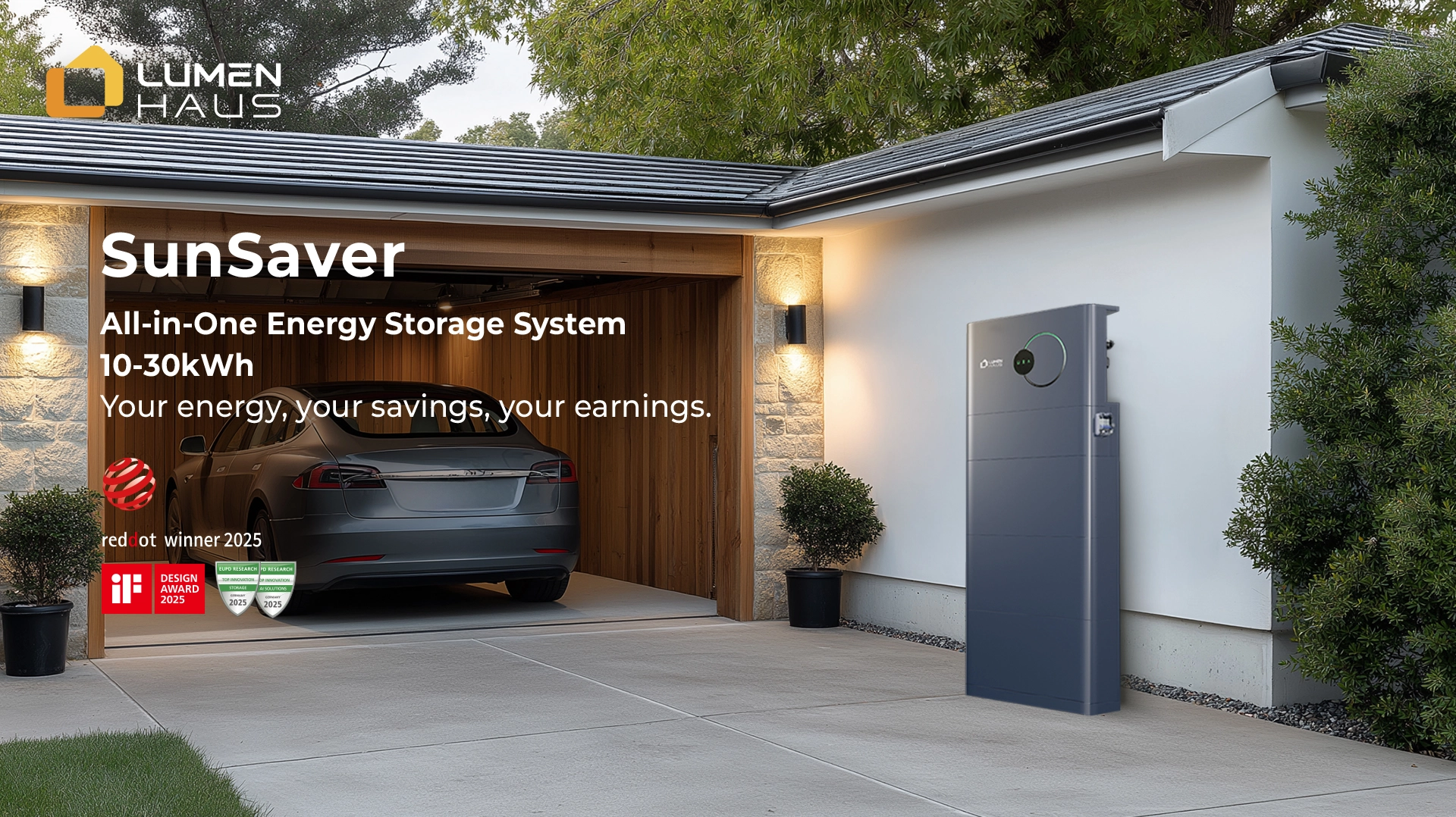
The LumenHaus SunSaver is designed as an all-in-one energy storage system for residential use. With capacities ranging from 10 to 30 kWh, it can be adapted to different household sizes and usage profiles.
A key feature is its fast switchover time of under 20 milliseconds, which enables uninterrupted backup operation. The system is certified for outdoor installation and designed for long-term reliability.
Energy flows can be monitored and managed via the myLumenHaus App. Smart-Eco Mode automatically creates the optimal energy strategy by adjusting charging and discharging based on weather forecasts, dynamic tariffs, and consumption behavior—helping users maximize savings on their energy bills while enjoying a smarter, more effortless energy experience.
Conclusion: A Strategic Investment in Energy Independence
Energy storage systems are not a short-term trend. They are a practical response to rising electricity prices, changing regulations and the increasing share of renewable energy in the grid.
For German homeowners, batteries offer a way to make better use of solar power, reduce costs and prepare for future market models such as dynamic tariffs and local energy sharing. With careful planning and the right system choice, energy storage becomes a rational investment rather than a technological experiment.
The decentralised energy transition is redefining how homes generate and use power. LumenHaus SunSaver, an intelligent home battery storage system, enables households to maximise self-consumption, lower energy costs, and gain true energy independence. Start your decentralised energy journey today.