How Residential Energy Storage Systems Will Shape Home Energy Consumption in Germany by 2026
Reliable Residential Battery Storage Systems for Homes in Germany
Germany’s residential energy storage market is entering a decisive phase. Rising electricity prices, declining feed-in tariffs, and increasing pressure on the public power grid are fundamentally changing how homeowners think about energy.
In this new reality, residential energy storage systems are no longer optional upgrades. They are becoming a core element of modern, cost-efficient, and resilient home energy solutions across Germany.
As more households generate their own solar power, the question is no longer whether to install photovoltaics — but how effectively that energy can be stored, managed, and used.
Why Residential Energy Storage Is Becoming Essential for German Homes
Solar panels alone cannot deliver true energy independence without home battery storage.
In Germany, photovoltaic systems generate most electricity during daylight hours, while household consumption peaks in the evening and at night. Without storage, a large share of self-produced solar power is fed into the grid at low compensation rates.
Residential battery storage systems close this gap.
By storing surplus solar electricity and releasing it when demand is highest, home energy storage enables households to:
- Reduce dependence on the public grid
- Protect against electricity price volatility
- Significantly increase solar self-consumption
- Maintain power supply during grid outages
For many German homeowners, energy storage has evolved from a technical add-on into a strategic investment for long-term cost control and energy security.
How Home Solar Battery Storage Systems Work
A solar battery storage system for the home captures excess electricity produced by rooftop photovoltaic panels instead of exporting it directly to the grid.
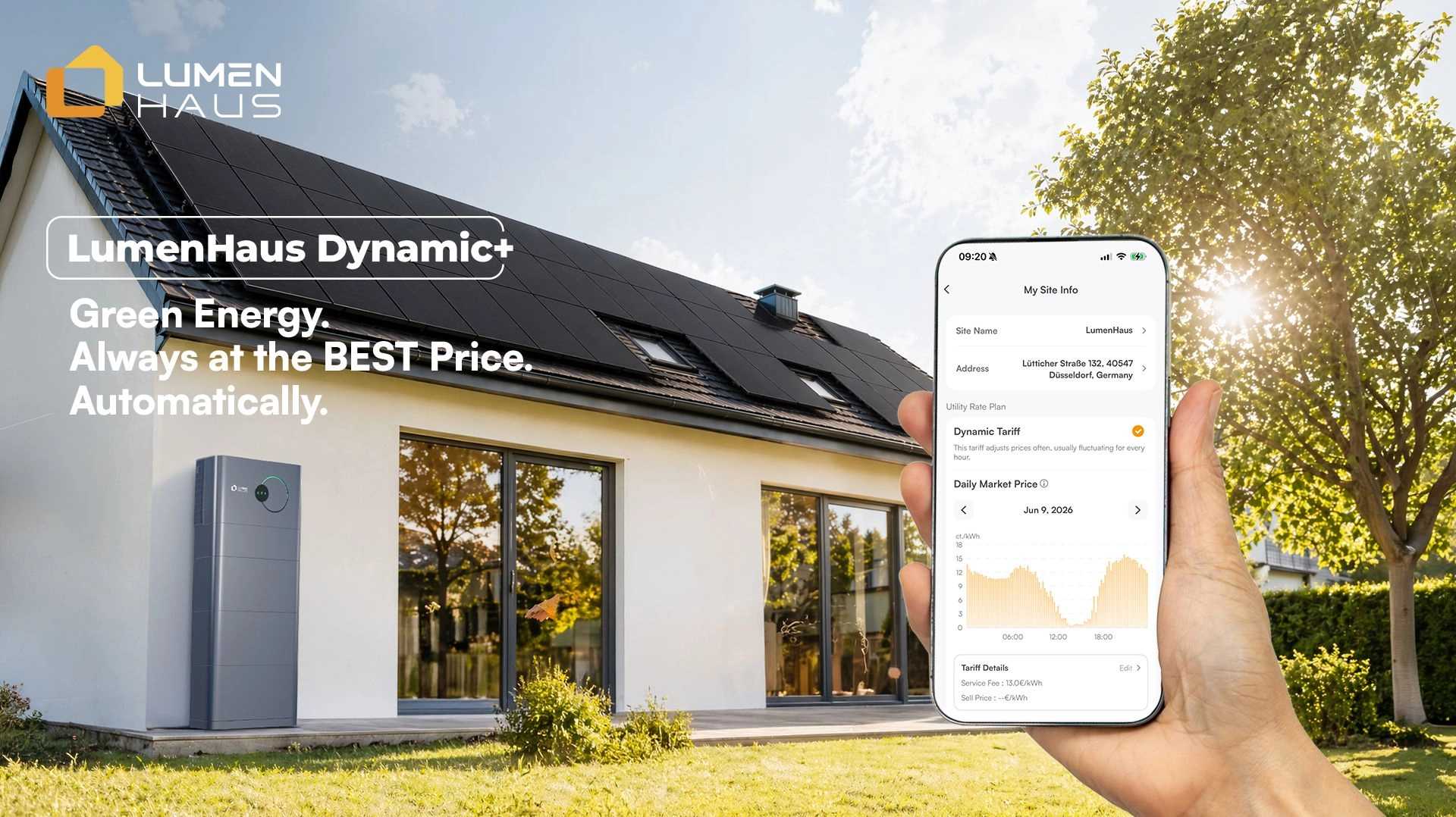
When solar generation drops — after sunset or during periods of low irradiation — the system automatically supplies stored electricity to the household. Intelligent energy management software continuously optimizes charging and discharging based on consumption patterns, electricity prices, and solar forecasts.
The result is lower electricity bills, higher energy autonomy, and greater control over household energy usage.
Lower Electricity Bills Through Higher Self-Consumption
Electricity prices in Germany remain among the highest in Europe and continue to fluctuate. At the same time, feed-in tariffs for solar power have steadily declined.
Home battery storage addresses both challenges.
By maximizing self-consumption, households use more of their own renewable electricity and rely less on external suppliers. In addition, intelligent battery systems can store electricity during low-cost periods and make it available when grid prices are higher.
Over the lifetime of a system, this approach can substantially reduce total household energy costs while improving predictability.
Reliable Power Supply During Grid Outages
Energy security is becoming an increasingly important concern for homeowners in Germany.
A residential solar battery storage system can provide backup power during grid outages, keeping essential systems running. Lighting, refrigeration, communication devices, and smart home functions remain operational even when the grid is unavailable.
With sufficient battery capacity and solar input, households can maintain a high level of energy autonomy without relying on fuel-based generators.
Environmental Benefits of Home Battery Storage
Beyond financial advantages, home battery storage systems play a critical role in climate protection.
By increasing the share of renewable electricity consumed directly on-site, batteries reduce reliance on fossil-fuel-based grid power. On a broader scale, widespread residential storage supports Germany grid stability and accelerates the integration of renewable energy sources.
For homeowners, energy storage combines financial savings with a measurable environmental impact.
Can a Solar Battery Storage System Power an Entire Home?
Whether a battery system can supply an entire home depends on several factors, including:
- Battery capacity and power output
- Household electricity consumption
- Load prioritization during outages
Modern modular battery systems allow capacity to be expanded over time. Homeowners can start with essential backup power and gradually scale toward full-home coverage as energy needs grow. Professional system planning ensures the right balance between performance, cost efficiency, and future flexibility.
What to Look for in a Home Battery Storage System
When choosing a residential battery system for a home in Germany, homeowners should focus on:
- Usable energy capacity
- Power output and surge performance
- System efficiency and intelligent energy management
- Installation flexibility and weather protection
- Warranty coverage and long-term service support
A well-designed battery system should deliver reliable performance for many years while adapting to future energy requirements.
LumenHaus SunSaver: Smart Battery Storage for Modern German Homes
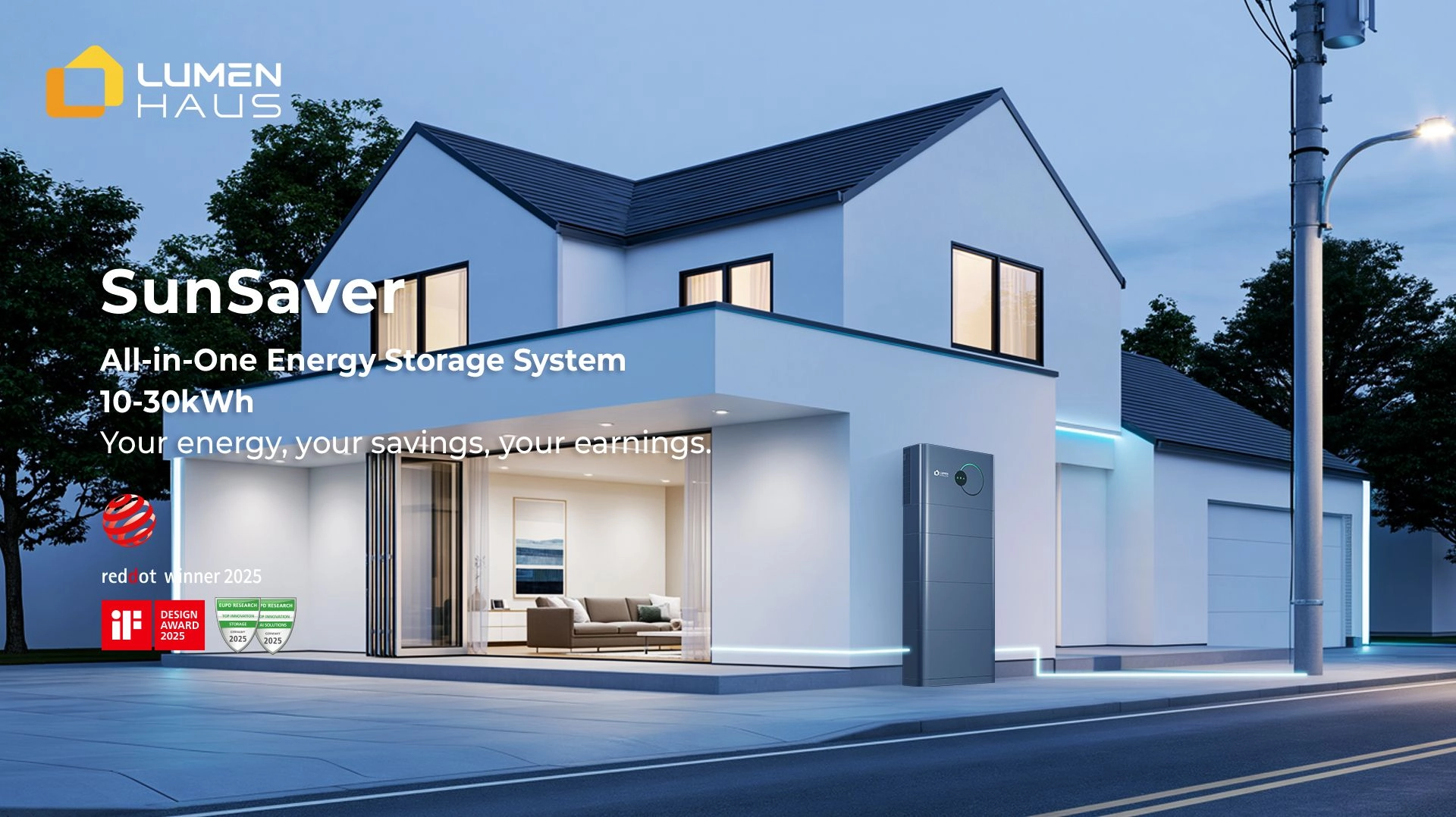
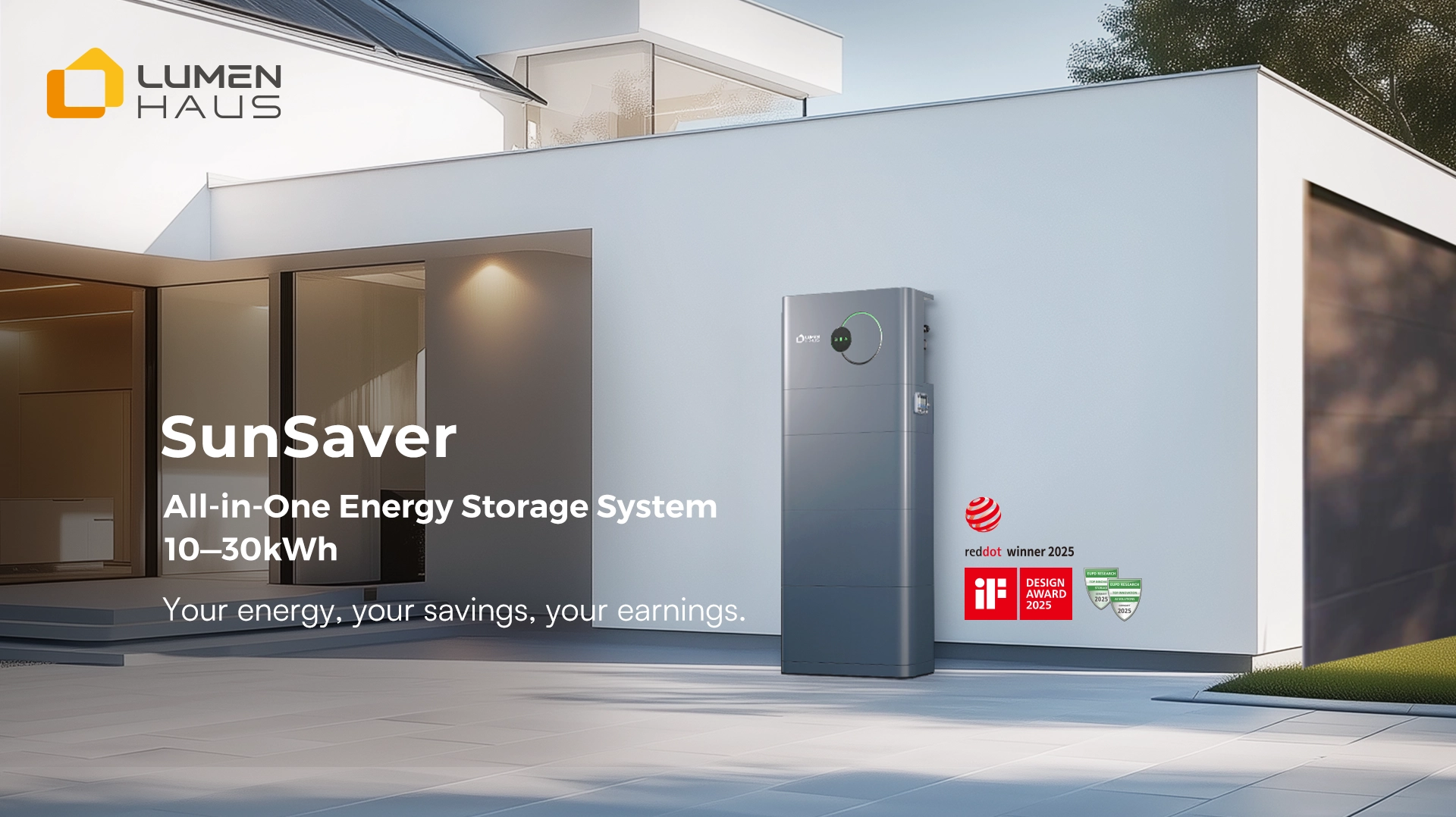
Not all battery storage systems are designed to meet these evolving requirements. LumenHaus SunSaver All-in-One Energy Storage System is designed specifically for the demands of modern residential energy systems in Germany.
With its minimalist graphite-gray design, SunSaver integrates seamlessly into indoor or outdoor environments. The modular architecture supports flexible expansion from 10 kWh to 30 kWh, adapting to different household sizes and consumption profiles.
High-performance cylindrical LFP cells provide up to 8,000 cycles of safe and stable operation. An advanced energy management system enables intelligent forecasting, optimized energy flows, and long-term system reliability. SunSaver is also prepared for future participation in virtual power plants, ensuring long-term investment security as regulations, electricity pricing, and energy markets continue to evolve.
Conclusion: Residential Battery Storage Is the Foundation of Future-Ready Homes
Residential energy storage is reshaping how German households produce, store, and consume electricity. By reducing costs, increasing energy independence, and enhancing supply security, solar battery storage systems are becoming a standard feature of energy-resilient homes.
As Germany moves toward 2026 and beyond, households equipped with intelligent battery storage will be better protected against rising electricity prices, grid disruptions, and regulatory changes.
Discover how LumenHaus SunSaver can help you take control of your home energy future— today and beyond.