Is a Balcony Solar System with Battery Storage Still Worth It in 2026?
Here's a scenario that may sound VERY familiar to many:
With household electricity prices in Germany remaining relatively high, more homeowners and renters are looking for ways to reduce their energy costs over the long term. Balcony solar storage systems have become one of the easiest entry points into renewable energy thanks to their simple installation, low upfront investment, and accessibility for apartments and smaller homes.
Yet after installation, many users quickly notice something unexpected: their solar panels generate a decent amount of electricity, but their utility bills don't fall as much as they had hoped.
The reason isn't that the system isn't producing enough power. More often, it's because many households overlook one important factor: how much of that solar energy they actually use themselves.
As battery storage technology becomes more affordable and smart energy management continues to evolve, more German households are asking a new question:
If I could store the excess solar power generated during the day and use it later in the evening, would I see a better return on my investment?
Why Aren't Electricity Bills Dropping as Much as Expected After Installing Solar?
When people first start exploring solar energy, they usually focus on one thing: how much electricity the system can generate each year.
In reality, what determines your savings isn't how much energy your panels produce—it's how much of that energy you actually consume.
For most households, the pattern looks very similar.
The sun is strongest during the middle of the day, when many family members are at work, at school, or away from home. During these hours, the solar system may be generating plenty of electricity, but household consumption is often relatively low.
In the evening, however, things change. People return home, start cooking dinner, turn on lights, use appliances, stream entertainment, and charge devices. Electricity demand rises just as solar production begins to disappear.
This mismatch between when energy is generated and when it's needed means that a significant portion of solar power isn't being used at its most valuable moment.
As a result, many households still rely heavily on grid electricity after sunset, even though their solar system performed well throughout the day.
That's one of the main reasons many homeowners feel they're generating plenty of energy but not seeing the level of savings they expected.
Can Solar Power Generated During the Day Be Used at Night?
This is exactly the problem battery storage system is designed to solve.
Think of a home battery storage system as an energy reserve for your household.
When your solar system produces more electricity than you're using, the excess energy is stored instead of being sent away unused.
Later in the evening, when electricity demand increases and solar generation has stopped, the battery automatically supplies the stored energy back to your home.
The process happens seamlessly in the background.
For homeowners, the biggest benefit is simple:
The solar energy that would normally only be available during daylight hours can now help power your home during dinner time, evening entertainment, lighting, and other daily activities.
Battery storage system doesn't increase how much electricity your solar panels generate. Instead, it helps you make better use of the energy you've already produced.
How Much Money Can a Home Battery Actually Save Each Year?
This is the question most households want answered.
The truth is that savings vary depending on several factors, including household size, energy consumption habits, system configuration, and local electricity prices.
However, one thing is certain:
The more solar energy you use yourself, the less electricity you need to buy from the grid.
For a typical German household with solar panels alone, only part of the generated electricity is consumed directly. Adding battery storage allows excess midday generation to be shifted into the evening, significantly increasing overall energy utilization.
Take the LumenHaus SunMini balcony storage system as an example. When paired with a 2.8 kW solar installation and 6 kWh of storage capacity, households can achieve energy self-sufficiency rates of up to 87% under ideal conditions and reduce annual electricity costs by as much as €1,127.
Compared to a solar-only setup, overall savings can increase by up to 82%.
For many families, the value of battery storage isn't about saving money on next month's utility bill—it's about reducing energy costs consistently over the next decade and beyond.
Which Households Benefit Most from Battery Storage System?
Battery storage system doesn't deliver the same value for everyone.
The biggest factor is not how much electricity you use, but when you use it.
Homes that sit empty for much of the day often see the strongest returns.
A typical example is a household where both adults work outside the home. Solar production peaks around midday, but there is little demand at that time. In the evening, however, energy consumption increases significantly.
Battery storage system bridges that gap by shifting energy from the time it's generated to the time it's needed most. Households that frequently use kitchen appliances, dishwashers, entertainment systems, or home office equipment during the evening hours can also benefit substantially.
Is a Bigger Battery Always Better?
This is one of the most common misconceptions in the storage market.
Many people assume that a larger battery automatically leads to bigger savings.
In reality, that's not always true.
If your household only has a limited amount of excess solar energy available each day, a very large battery may spend much of its life underutilized.
That means higher upfront costs without proportional benefits.
Choosing the right battery size requires balancing several factors, including current solar production, evening energy demand, seasonal fluctuations, and future energy plans.
The best battery storage system isn't necessarily the largest one. It's the one that matches your household's real-world energy profile.
How Long Does It Take for a Battery Storage System to Pay for Itself?
For many buyers, this is the deciding factor.
A few years ago, battery prices kept many households on the sidelines. Today, the economics are changing rapidly.
As battery technology improves and production scales up, storage systems are becoming increasingly cost-effective.
In Germany's current energy environment, households that significantly increase their solar self-consumption can often achieve much faster payback periods than before.
With a properly configured setup such as the LumenHaus SunMini, investment payback can be achieved in as little as 3 years under ideal conditions, with many households reaching full return on investment in around three years.
Of course, actual results depend on individual consumption patterns and system sizing.
But from a long-term perspective, battery storage is increasingly becoming an essential part of maximizing the financial value of solar energy.
What Happens If My Energy Needs Grow in the Future?
This is becoming a major consideration for homeowners.
Energy demand rarely stays the same over time. Many people initially install solar panels simply to reduce their electricity bills. But life changes.
A few years from now, you may decide to switch to an electric vehicle, replace a traditional heating system with a heat pump, or expand your use of renewable energy throughout the home.
As these changes occur, electricity demand can increase significantly.
That's why more consumers are looking beyond today's requirements and considering how easily a storage system can adapt to future needs.
SunMini balcony storage system offers a practical advantage by allowing capacity to grow over time without replacing the entire setup.
For long-term investments, flexibility often proves more valuable than choosing the lowest upfront cost.
Why the Future of Home Energy Is About Smarter Energy Use, Not More Energy Production
Over the past decade, the energy industry has focused primarily on generating more renewable electricity.
Over the next decade, the focus will shift toward using that energy more intelligently.
As smart meters become more common, dynamic electricity pricing expands, and artificial intelligence enters the home energy market, battery systems are evolving into comprehensive energy management platforms.
Future systems won't simply store electricity. They'll actively optimize when energy is stored, when it's used, and when it makes sense to draw power from the grid.
By analyzing weather forecasts, electricity prices, and household consumption patterns, these systems can make smarter decisions automatically.
For homeowners, that means greater efficiency, lower costs, and less manual intervention.
Ultimately, the real value won't come from generating more electricity—it will come from managing every kilowatt-hour more effectively.
So... What is SunMini?
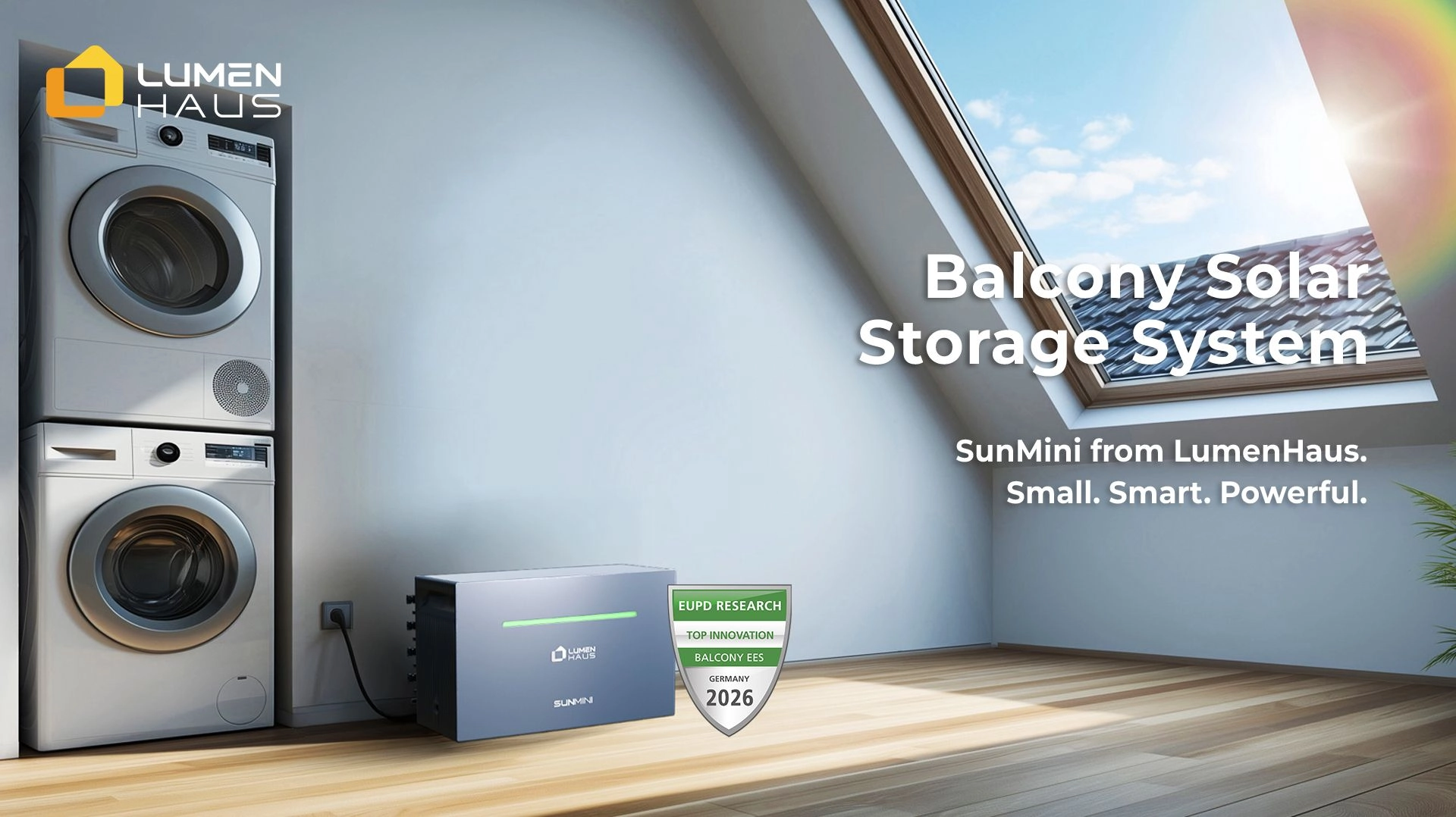
SunMini, LumenHaus has introduced its next-generation balcony storage solution.
Designed for more than just energy storage, SunMini focuses on maximizing long-term household energy savings.
The system supports up to 2800 W of solar input and 2500 W of output power. Capacity can be expanded flexibly from 4 kWh to 20 kWh, while wireless multi-unit expansion enables total storage capacity of up to 80 kWh to meet evolving household needs.
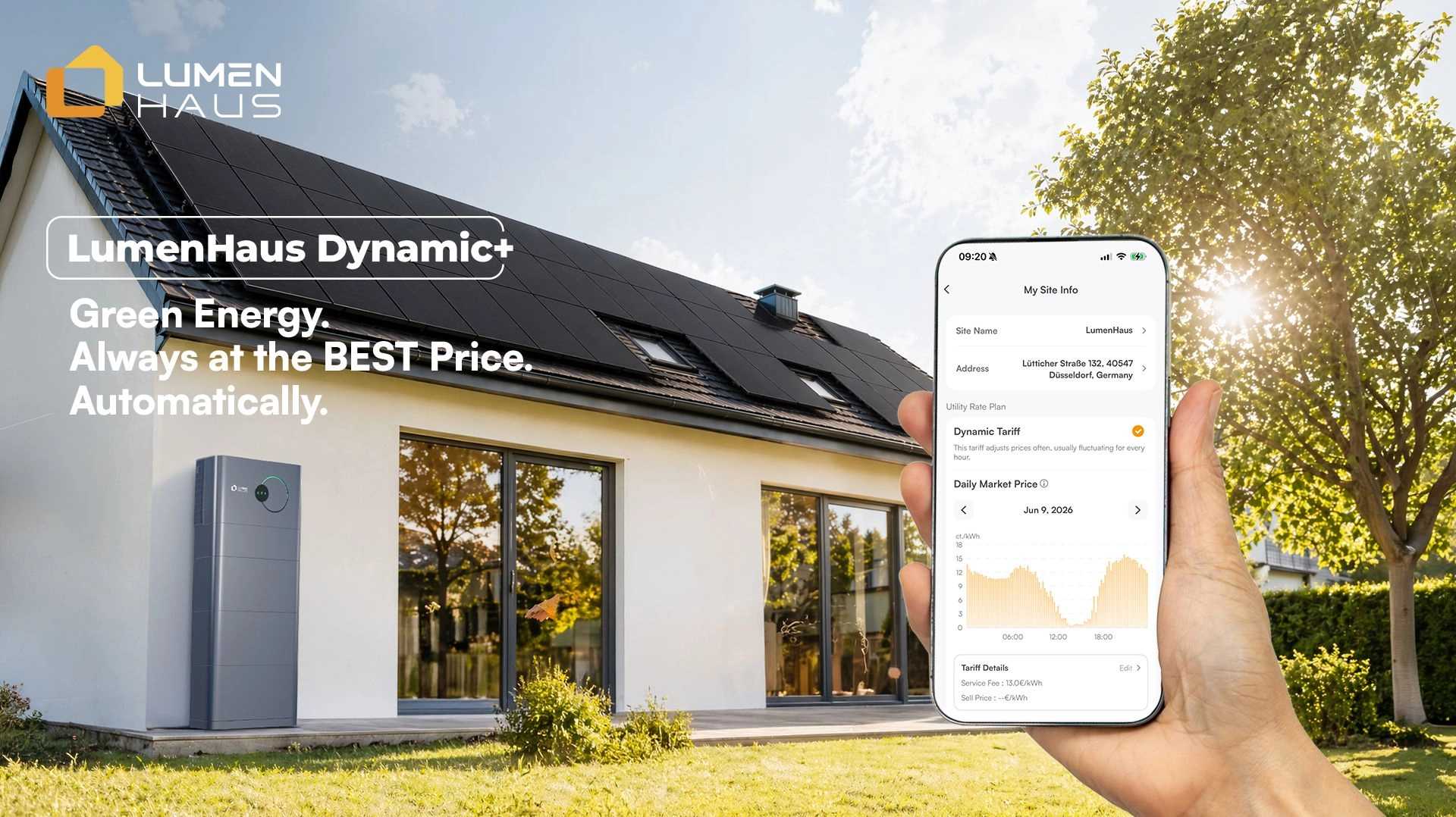
SunMini also features AI-powered Smart-Eco Mode and the Dynamic+ dynamic tariff, which continuously optimize charging and discharging strategies based on weather forecasts, household consumption patterns, and real-time electricity prices.
For homeowners looking to lower energy bills, increase energy independence, and prepare for the future of home energy, SunMini is more than just a battery system—it's an intelligent energy manager working around the clock.
Start Your Journey Toward Smarter Home Energy
If you're looking for ways to make better use of your solar power, reduce reliance on the grid, and maximize the long-term return on your energy investment, now is the perfect time to explore the next generation of smart energy storage.
LumenHaus SunMini
✓ AI-Powered Energy Management
✓ Dynamic+ Tariff Optimization
✓ Flexible Expansion from 4 kWh to 80 kWh
✓ Payback in as Little as 3 Years
Discover how SunMini can help you store more solar energy, save more every day, and take greater control of your home's energy future.